
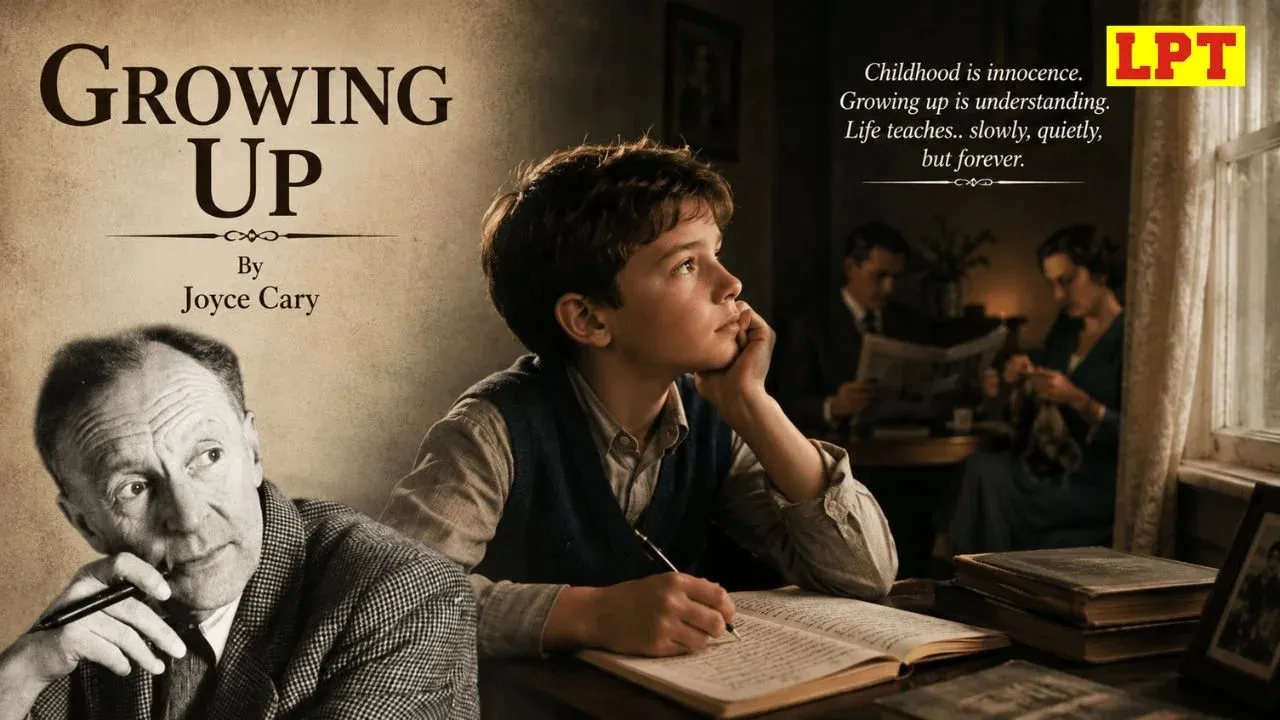
Growing Up by Joyce Cary is a thoughtful and emotionally realistic short story that explores childhood, emotional maturity, fear, learning, family influence, and personal growth through the experiences of a young narrator. The story focuses on how ordinary childhood experiences slowly shape understanding, confidence, and maturity over time.
One of the most important aspects readers notice in the summary of Growing Up is the realistic portrayal of emotional development and the gradual transition from innocence to understanding. The narrative also highlights themes like family relationships, self-discovery, fear, responsibility, and learning from experience.
Through reflective narration and psychological realism, the story presents growing up not as a sudden change but as a slow emotional process influenced by everyday situations and family interactions.
Below, we have covered the complete summary, characters, themes, literary devices, symbolism, important questions and answers, quotes, moral message, and everything else readers should know about Growing Up by Joyce Cary.\
Explore The Complete Summaries of Novels, Stories & Essay Notes
Key Details About Growing Up by Joyce Cary
These are the most important things to know about Growing Up short story:
| Particular | Details |
|---|---|
| Story Name | Growing Up |
| Author | Joyce Cary |
| Genre | Psychological / Coming-of-Age Short Story |
| Main Themes | Childhood, Growth, Fear, Family, Maturity |
| Setting | Family Environment |
| Writing Style | Reflective and Realistic |
| Tone | Emotional and Thoughtful |
| Central Idea | Emotional maturity develops gradually through life experiences |
| Main Conflict | Childhood innocence versus growing understanding of reality |
| Important Literary Elements | Symbolism, Realism, Characterization, Emotional Contrast |
| Narrative Style | Reflective First-Person Narration |
Learn the Summary of The Night the Ghost in by James Thurber
Growing Up by Joyce Cary: Summary
This is the summary of Growing Up by Joyce Cary:
Beginning
Growing Up begins by presenting the narrator’s childhood world and emotional experiences within a family environment. The narrator is young, observant, emotionally sensitive, and still trying to understand the behavior of adults and the realities of life around him. At this stage, childhood innocence strongly shapes his thinking, and many situations appear confusing, frightening, or emotionally overwhelming.
The story gradually introduces the idea that growing up is not simply about physical age but about emotional understanding and maturity. Family interactions, discipline, fear, expectations, and daily experiences slowly influence the narrator’s thinking and personality.
The beginning establishes themes like childhood innocence, emotional learning, family influence, fear, and the gradual process of maturity. Joyce Cary uses reflective narration and realistic emotional detail to create a believable picture of childhood psychology.
Middle
As the story progresses, the narrator begins facing situations that challenge his childish understanding of life. Through family experiences, emotional conflict, fear, observation of adult behavior, and personal reflection, he slowly starts developing emotional awareness and maturity. Situations that once appeared simple now seem more complex and meaningful.
The narrator gradually realizes that adults also experience weakness, pressure, responsibility, and emotional struggle. This realization becomes an important part of his emotional growth. Fear, confusion, disappointment, and curiosity all contribute to the process of learning and maturity. The middle section focuses heavily on psychological realism and emotional development rather than dramatic external action.
The story realistically portrays how children slowly begin understanding discipline, relationships, expectations, and emotional reality through ordinary experiences. The process of growing up appears gradual, sometimes uncomfortable, but emotionally necessary. Family influence plays a major role in shaping the narrator’s personality and understanding of life.
Ending
Towards the ending, the narrator achieves greater emotional understanding and maturity compared to the beginning of the story. Although the transformation is subtle rather than dramatic, readers can clearly notice his deeper awareness of people, emotions, responsibility, and reality.
The conclusion emphasizes that growing up is a continuous emotional journey shaped by experience, observation, mistakes, fear, relationships, and reflection. Childhood innocence slowly gives way to maturity and understanding. The story does not present growth as perfect or easy but as a natural and emotionally complex part of life.
Through realistic narration and psychological observation, Joyce Cary explores emotional growth, family influence, self-discovery, and the transition from innocence to maturity. The story leaves readers reflecting on how ordinary experiences quietly shape personality, understanding, and emotional development over time.
Short Summary of Growing Up by Joyce Cary
Growing Up is a reflective and emotionally realistic story about childhood, maturity, family influence, and emotional development. The narrative follows a young narrator who slowly begins understanding life, relationships, responsibility, and human behavior through everyday family experiences. As he observes adults and faces emotional situations, his innocence gradually changes into deeper awareness and maturity.
The story highlights how growing up is a slow emotional process shaped by fear, learning, observation, and personal experience rather than sudden change. Through psychological realism and thoughtful narration, Joyce Cary explores themes like childhood innocence, emotional growth, self-discovery, and family relationships.
About the Author Joyce Cary
Joyce Cary was a well-known British-Irish novelist and short story writer recognized for his psychological realism and deep understanding of human emotions and relationships. Born in 1888, he became famous for writing stories that explored personal identity, emotional growth, family life, and social experience with honesty and realism.
Joyce Cary’s writing style is reflective, thoughtful, realistic, and emotionally observant. He often focused on ordinary people and everyday situations to reveal deeper truths about human nature, maturity, fear, relationships, and self-discovery. His stories are known for psychological depth, natural dialogue, and strong emotional realism rather than dramatic action.
His works remain valuable for students because they improve reading comprehension, emotional interpretation, character analysis, and understanding of realistic literature through relatable and thoughtful storytelling.
Main Characters in Growing Up Story
Growing Up by Joyce Cary have these primary characters:
Narrator / Young Boy
The narrator is emotionally sensitive, curious, observant, and thoughtful. Through his experiences and reflections, readers witness the gradual process of emotional maturity and understanding. His character symbolizes childhood innocence, learning, self-discovery, and the emotional journey from confusion to awareness.
Father
The father represents authority, discipline, experience, and adult responsibility. Through his actions and behavior, the narrator slowly begins understanding the complexities of adulthood and family expectations. His character symbolizes guidance, social structure, and the influence adults have on a child’s emotional development.
Mother
The mother provides emotional support, care, and stability within the family environment. She represents comfort, emotional understanding, and family warmth. Her character helps balance the emotional atmosphere of the story while influencing the narrator’s emotional growth and sense of security.
Other Family Members
The other family members contribute to the narrator’s understanding of relationships, emotions, responsibility, and social behavior. Their interactions help shape his emotional maturity and broaden his understanding of human nature and family dynamics.
Read Short Story Summaries
Read concise and student-friendly summaries of famous short stories along with themes, moral lessons, literary devices, and important questions:
Themes of Growing Up by Joyce Cary
- Childhood and Maturity: The story explores how innocence slowly transforms into emotional understanding and maturity through life experiences.
- Emotional Growth: The narrator develops greater awareness of emotions, relationships, fear, responsibility, and reality as the story progresses.
- Family Influence: Family relationships and interactions play an important role in shaping the narrator’s personality and understanding of life.
- Fear and Learning: Fear and uncertainty become important parts of emotional development and personal growth throughout childhood.
- Innocence and Experience: The narrative highlights the gradual movement from childish innocence toward realistic understanding and emotional awareness.
- Self-Discovery: The story shows how individuals slowly understand themselves and the world around them through observation and reflection.
- Human Relationships: The narrative realistically portrays emotional connection, family expectations, support, and interpersonal understanding.
Growing Up by Joyce Cary: Literary Devices
The literary devices used in the Growing Up short story are realism, characterization, symbolism, emotional contrasts, imagery, and psychological narration.
| Literary Device | How It Is Used in the Story |
|---|---|
| Realism | The story realistically portrays childhood experiences, family interactions, and emotional development without exaggeration. |
| Characterization | Joyce Cary develops characters through thoughts, emotions, behavior, and realistic family relationships. |
| Symbolism | Growing up symbolizes emotional maturity, self-discovery, and gradual understanding of life and human nature. |
| First-Person Narration | The personal narration allows readers to experience the narrator’s emotional growth and changing understanding directly. |
| Emotional Contrast | The contrast between innocence and maturity creates emotional depth throughout the narrative. |
| Imagery | Descriptions of family situations and emotional reactions create realistic and relatable scenes. |
| Psychological Narration | The story focuses deeply on emotions, fear, reflection, and inner development rather than external action. |
Why Read Growing Up Short Story?
Growing Up remains meaningful because it realistically explores emotional maturity, childhood experiences, family influence, and personal growth through simple yet thoughtful storytelling.
- Improves Emotional Interpretation Skills: The story helps readers understand emotional growth, fear, maturity, and human relationships deeply and realistically.
- Develops Understanding of Human Psychology: The narrative explores how childhood experiences shape emotional understanding and personality over time.
- Helps in Character Analysis: The narrator’s emotional journey provides excellent material for psychological and literary interpretation.
- Improves Reading Comprehension: The reflective narration and realistic storytelling improve analytical reading and understanding of subtle emotional meaning.
- Encourages Reflection on Personal Growth: The story makes readers think about maturity, learning, childhood experiences, and emotional development in their own lives.
Growing Up by Joyce Cary: Questions and Answers
Who wrote Growing Up?
Growing Up was written by Joyce Cary, a well-known writer famous for psychological realism and thoughtful exploration of human emotions, family relationships, and personal growth.
What is the main theme of Growing Up?
The main theme of the story is emotional growth and maturity. The narrative also explores childhood innocence, fear, family influence, learning through experience, self-discovery, and the gradual understanding of human relationships and reality.
Who is the narrator in the story?
The narrator is a young boy whose experiences and observations form the central focus of the story. Through his perspective, readers witness the emotional process of growing up and developing maturity through family life and everyday experiences.
How does the story portray childhood?
The story presents childhood as a period of curiosity, confusion, fear, emotional sensitivity, and gradual learning. It realistically shows how children slowly begin understanding the complexities of life and human behavior.
What role does family play in the story?
Family plays a major role in shaping the narrator’s emotional development and understanding of life. Interactions with parents and family members influence his maturity, emotional awareness, and personal growth throughout the narrative.
What does “growing up” symbolize in the story?
Growing up symbolizes emotional maturity, self-awareness, understanding of reality, and gradual movement from innocence toward experience and responsibility. The story shows that emotional growth happens slowly through life experiences.
How does Joyce Cary use realism in the story?
Joyce Cary uses realistic narration, natural family interactions, emotional observation, and psychological detail to make the story believable and emotionally relatable.
What emotional changes happen in the narrator?
The narrator gradually becomes more emotionally aware, thoughtful, and mature. He starts understanding fear, relationships, responsibility, and adult behavior more deeply compared to the beginning of the story.
What literary devices are used in Growing Up?
The story mainly uses realism, symbolism, characterization, imagery, emotional contrast, psychological narration, and first-person narration. These literary devices help create emotional depth and realistic storytelling.
Why is Growing Up considered a psychological story?
The narrative focuses heavily on inner emotions, thoughts, fear, learning, and emotional maturity rather than dramatic action. The psychological development of the narrator becomes the central focus of the story.
What message does the story give readers?
The story teaches that emotional maturity develops gradually through experience, observation, relationships, and self-reflection. It also reminds readers that growing up is a natural but emotionally complex process.
Why is fear important in the story?
Fear becomes an important part of emotional learning and development. The narrator’s experiences with confusion and uncertainty help him gain maturity and deeper understanding of life and people.
How does the story show emotional growth?
The narrator slowly develops greater understanding of family relationships, responsibility, emotions, and reality through everyday situations and personal reflection, showing realistic emotional development.
Moral Message of Growing Up by Joyce Cary
Growing Up teaches that maturity develops gradually through experience, observation, relationships, and emotional learning. The story reminds readers that childhood confusion, fear, and family experiences all contribute to personal growth and deeper understanding of life, responsibility, and human nature over time.
PDF of Growing Up by Joyce Cary
Click below to download the Growing Up PDF.
Explore Other Exam Preparation Resources
Prepare smarter with our dedicated coaching programs, preparation guides, mock tests, and study resources for top competitive exams in India.