
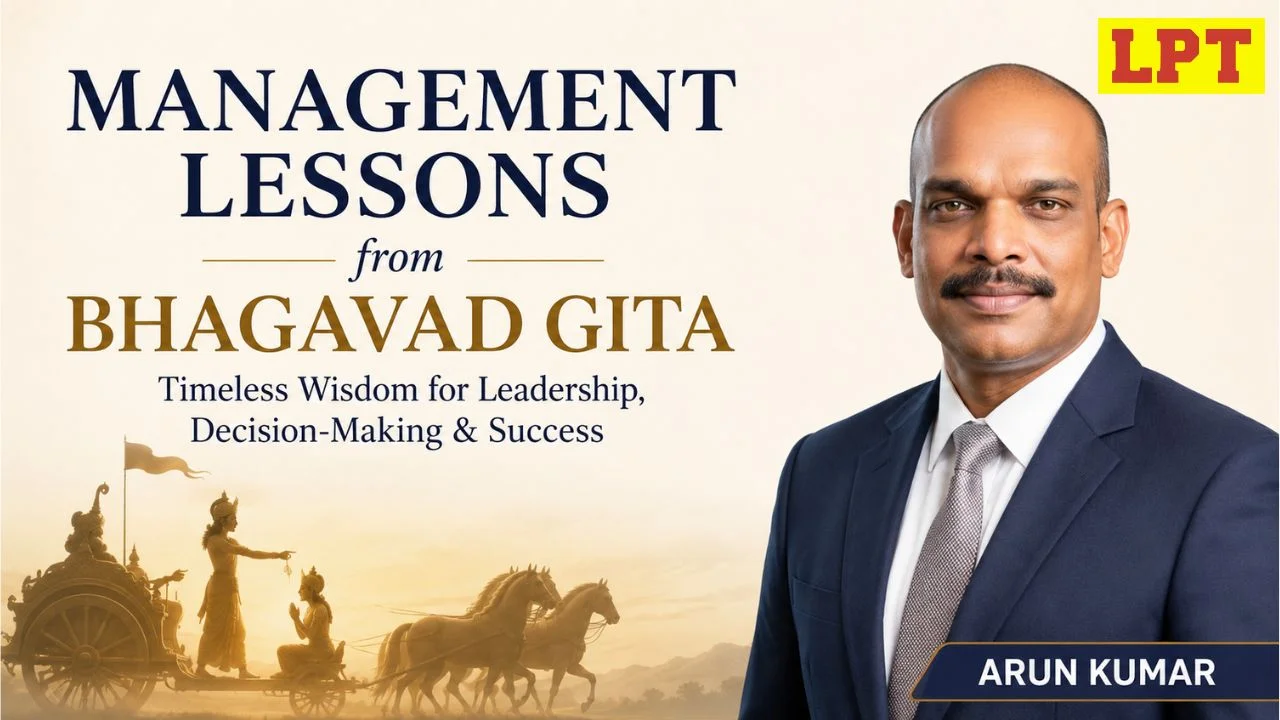
Management Lessons from Bhagavad Gita by Arun Kumar is a management and self-development book that explains how the teachings of the Bhagavad Gita can be applied in modern leadership, decision-making, teamwork, stress management, and professional life.
The book mainly focuses on the conversations between Krishna and Arjuna on the battlefield of Kurukshetra and connects those lessons with present-day management practices. The central idea of the book is that discipline, self-control, responsibility, emotional balance, and ethical leadership are essential for success in life and management. Major themes include leadership, duty, Karma Yoga, emotional intelligence, focus, wisdom, and self-awareness.
Below, we have covered the summary of Management Lessons from Bhagavad Gita book, themes, central idea, important characters and concepts, literary devices, famous quotes, moral message, and why you should read this practical and insightful management book.
Explore The Complete Summaries of Novels, Stories & Essay Notes
Management Lessons from Bhagavad Gita: Key Highlights
These are the key details to know about Arun Kumar’s Management Lessons from Bhagavad Gita book:
| Detail | Information |
| Book Name | Management Lessons from Bhagavad Gita |
| Author | Arun Kumar |
| Genre | Management / Self-Development / Spiritual Leadership |
| Main Inspiration | Bhagavad Gita |
| Main Characters Discussed | Krishna and Arjuna |
| Major Themes | Leadership, Duty, Discipline, Karma Yoga, Emotional Intelligence |
| Central Idea | Spiritual wisdom and ethical thinking improve leadership and management abilities |
| Main Focus | Applying Bhagavad Gita principles in modern management and life |
| Writing Style | Simple, practical, motivational, and reflective |
| Famous For | Connecting ancient Indian wisdom with modern management practices |
| Recommended For | Students, professionals, managers, aspirants, entrepreneurs |
| Important Topics Covered | Leadership, stress management, teamwork, ethics, decision-making |
| Key Lesson | Balanced thinking, discipline, and responsibility lead to successful leadership and personal growth |
Management Lessons from Bhagavad Gita: Summary
Find the summary of Management Lessons from Bhagavad Gita by Arun Kumar:
Beginning
Management Lessons from Bhagavad Gita begins by introducing the battlefield of Kurukshetra from the Bhagavad Gita, where Arjuna faces emotional confusion, fear, stress, and moral conflict before the war. At this critical moment, Krishna guides him with teachings related to duty, discipline, focus, emotional control, and wisdom.
Arun Kumar connects these teachings with modern management and leadership situations. The beginning mainly explains how every individual faces confusion, pressure, and difficult decisions in life and work. Through Arjuna’s emotional struggle, the book introduces important lessons about leadership, self-management, clarity of thought, and responsibility.
Middle
The middle section of the book explores several management principles hidden within the Bhagavad Gita. Arun Kumar explains concepts like Karma Yoga, disciplined action, emotional intelligence, teamwork, decision-making, stress management, and ethical leadership using simple examples and modern workplace situations.
Krishna’s guidance to Arjuna is interpreted as leadership coaching, where leaders must remain calm, balanced, and focused even during challenging situations. The book emphasizes that successful leaders should perform their duties sincerely without becoming overly attached to success or failure.
It also explains the importance of self-awareness, patience, communication, positive thinking, and controlling emotions under pressure. The middle part strongly focuses on how spiritual wisdom can improve modern organizational culture, productivity, professionalism, and personal growth.
Through philosophical discussions and practical applications, the book shows that management is not only about achieving targets but also about developing balanced thinking and ethical behavior.
Ending
Towards the end of Management Lessons from Bhagavad Gita, the book concludes that true leadership and success come from discipline, inner stability, ethical actions, and understanding one’s responsibilities clearly. Arjuna regains confidence and clarity after Krishna’s guidance, symbolizing how wisdom and self-awareness help individuals overcome fear and confusion.
Arun Kumar emphasizes that modern professionals, students, and leaders can apply Bhagavad Gita teachings in daily life to manage stress, improve focus, handle challenges calmly, and maintain emotional balance. The book concludes with the message that management is not only about external success but also about self-control, meaningful work, and balanced living.
Short Summary of Management Lessons from Bhagavad Gita
Management Lessons from Bhagavad Gita by Arun Kumar explains how the teachings of the Bhagavad Gita can help people improve leadership, decision-making, emotional intelligence, discipline, and stress management in modern life and business. Through the dialogue between Krishna and Arjuna, the book presents practical lessons about duty, responsibility, teamwork, focus, ethical leadership, and self-awareness. The book mainly teaches that balanced thinking, emotional control, disciplined action, and wisdom are essential for successful leadership and personal growth.
Management Lessons from Bhagavad Gita: Main Characters and Concepts
Krishna
Krishna is the central guide and teacher in the book. He is calm, wise, emotionally balanced, and deeply philosophical. Through his teachings, Krishna explains leadership, discipline, emotional intelligence, and duty. He symbolizes wisdom, ethical leadership, self-awareness, and the importance of balanced decision-making during difficult situations.
Arjuna
Arjuna is a skilled warrior who faces emotional confusion and self-doubt before the Kurukshetra war. Through Krishna’s guidance, he learns discipline, courage, clarity, and responsibility. Arjuna symbolizes human struggle, emotional conflict, learning, and personal growth through wisdom and self-awareness.
Karma Yoga
Karma Yoga is one of the most important concepts discussed in the book. It teaches disciplined action without attachment to rewards or outcomes. It symbolizes responsibility, professionalism, focus, and performing duties sincerely with emotional balance and ethical thinking.
Dharma and Responsibility
The concept of Dharma focuses on fulfilling one’s duties honestly and responsibly. It symbolizes discipline, ethical behavior, leadership accountability, and commitment towards personal and professional responsibilities.
Leadership and Self-Management
Leadership in the book is presented as self-control, emotional stability, wise decision-making, and guiding others responsibly. It symbolizes balanced management, discipline, emotional intelligence, and service-based leadership.
Read Short Story Summaries
Read concise and student-friendly summaries of famous short stories along with themes, moral lessons, literary devices, and important questions:
Themes of Management Lessons from Bhagavad Gita by Arun Kumar
- Leadership and Responsibility: The book explains that true leaders guide others through wisdom, discipline, and ethical behavior rather than authority alone.
- Duty and Discipline: Performing responsibilities sincerely and consistently is presented as essential for success and personal growth.
- Emotional Intelligence: The book highlights the importance of controlling emotions, remaining calm, and maintaining mental balance during stressful situations.
- Self-Control and Mental Balance: Krishna’s teachings emphasize patience, focus, clarity, and inner stability while handling challenges and decisions.
- Ethical Decision-Making: The book promotes ethical thinking, honesty, and responsible actions in leadership and professional life.
- Karma Yoga and Work Ethics: The concept of Karma Yoga teaches disciplined action without attachment to rewards or fear of failure.
- Wisdom and Self-Awareness: Self-understanding and thoughtful decision-making are shown as important qualities of effective leaders and individuals.
- Stress Management and Focus: The teachings help individuals handle pressure, confusion, and workplace stress with clarity and confidence.
Central Idea of Management Lessons from Bhagavad Gita by Arun Kumar
The central idea of Management Lessons from Bhagavad Gita is that leadership and success require discipline, emotional balance, ethical behavior, responsibility, and self-awareness. Through Krishna’s teachings to Arjuna, the book explains how ancient spiritual wisdom can help modern individuals improve management skills, handle stress, make better decisions, and live a balanced and meaningful life.
Explore the Best Novels for IPMAT Preparation
Literary Devices Used in Management Lessons from Bhagavad Gita
| Literary Device | Usage in the Book |
| Dialogue | Conversations between Krishna and Arjuna explain management and life lessons clearly and practically. |
| Symbolism | The battlefield symbolizes life challenges, decision-making, and internal emotional conflicts faced by individuals. |
| Philosophical Interpretation | Spiritual teachings are interpreted as practical management and leadership principles for modern life. |
| Analogies | Everyday workplace and leadership situations are compared with Bhagavad Gita teachings for better understanding. |
| Reflective Tone | The book encourages readers to think deeply about leadership, ethics, discipline, and personal growth. |
| Inspirational Language | Motivational and positive language inspires readers to remain disciplined and emotionally balanced. |
| Moral Lessons | Every teaching and discussion delivers ethical and practical life lessons related to management and leadership. |
FAQs About Management Lessons from Bhagavad Gita
The book was written by Arun Kumar, known for connecting spiritual teachings with modern management concepts.
The central idea of the book is that discipline, emotional balance, ethical behavior, responsibility, and self-awareness are essential for successful leadership and meaningful living.
The book teaches leadership, emotional intelligence, teamwork, stress management, discipline, Karma Yoga, communication, and ethical decision-making.
Karma Yoga refers to performing duties sincerely without becoming emotionally attached to rewards or outcomes.
The Bhagavad Gita teaches self-control, emotional balance, wisdom, discipline, and ethical thinking, which are important qualities for effective leadership.
Students should read the book because it improves focus, emotional intelligence, confidence, communication, leadership understanding, and stress management.
Yes, the book explains Bhagavad Gita teachings in simple language using practical examples connected to modern management and daily life.
The book teaches people to remain calm, focused, emotionally balanced, and detached from fear and pressure during difficult situations.
Self-awareness helps individuals understand their emotions, responsibilities, strengths, and actions more clearly, improving leadership and personal growth.
The book teaches that disciplined action, balanced thinking, ethical behavior, and emotional control lead to successful leadership and meaningful life.
Explore Other Exam Preparation Resources
Prepare smarter with our dedicated coaching programs, preparation guides, mock tests, and study resources for top competitive exams in India.