
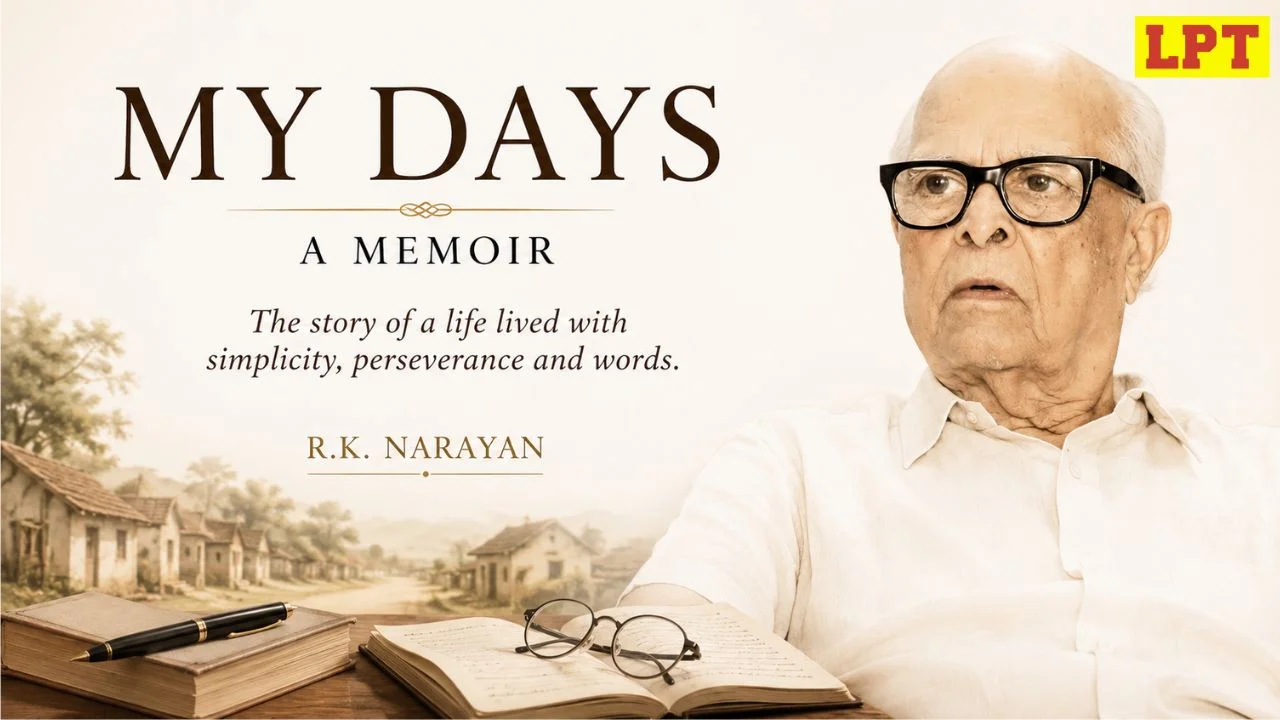
My Days: A Memoir by R.K. Narayan is the autobiographical story of one of India’s most respected writers, where he shares his childhood experiences, struggles as a writer, family life, personal loss, and literary journey in a simple and relatable way. The memoir mainly revolves around R.K. Narayan himself, along with important people in his personal and professional life, including his wife Rajam, family members, friends, and publishers.
The central idea of the book is that ordinary life experiences, patience, consistency, and self-belief shape a person’s growth and success over time. Major themes in the memoir include simplicity, perseverance, emotional strength, creativity, and self-discovery.
Below, we have covered the summary of R.K. Narayan autobiography, short summary, themes, central idea, important characters, life lessons, literary devices, important quotes, and why students should read this memoir.
Explore The Complete Summaries of Novels, Stories & Essay Notes
Summary of My Days: A Memoir by RK Narayan
Below is the summary of RK Narayan’s My Days- A Memoir:
Beginning
The memoir begins with R.K. Narayan sharing memories of his childhood and early life in South India. He talks about growing up in a traditional middle-class family and spending much of his childhood under the care of his grandmother. Narayan describes school life, his interest in reading, and his early observations about people and society. From a young age, he was deeply attracted to storytelling and literature.
However, becoming a writer was not considered a stable profession during that time, and he struggled to find direction in life. The beginning of the memoir introduces readers to his simple upbringing, curious personality, and gradual interest in writing.
Middle
As the memoir progresses, Narayan explains his journey towards becoming a professional writer. He faced several failures, rejections, and financial struggles in the early stages of his career. Despite these difficulties, he continued writing consistently and slowly started gaining recognition. A major emotional part of the memoir is his marriage to Rajam, whom he deeply loved.
Their relationship brought happiness and emotional balance into his life. However, tragedy struck when Rajam passed away at a young age due to illness. This loss deeply affected Narayan emotionally and changed his outlook on life. During this period, writing became both his profession and emotional support system. The memoir also discusses his literary growth, interactions with publishers, and the challenges of establishing himself as an Indian English writer during that era.
Ending
Towards the end of the memoir, Narayan reflects on his achievements, personal growth, and life experiences. He shares how patience, discipline, and dedication helped him become one of India’s leading authors. Despite fame and success, he remained humble and connected to ordinary life. The ending of the memoir feels thoughtful and reflective, where Narayan looks back at his journey with honesty and simplicity.
Rather than presenting himself as a perfect person, he openly discusses his fears, struggles, emotions, and lessons learned throughout life. The memoir ultimately leaves readers with the message that success is built slowly through consistency, self-belief, and resilience. It also highlights how personal experiences, both joyful and painful, shape a person’s identity and creativity over time.
Short Summary of My Days: A Memoir by RK Narayan
My Days: A Memoir is the autobiographical account of R.K. Narayan’s life, covering his childhood, education, struggles as a writer, family relationships, marriage, personal loss, and literary success. The memoir presents his journey from an ordinary middle-class boy to one of India’s most respected English writers.
Through simple storytelling, Narayan shares real-life experiences, emotional moments, failures, and achievements honestly and naturally. The book mainly highlights themes like perseverance, simplicity, creativity, self-discovery, and emotional strength. It also shows how patience, discipline, and continuous effort helped him succeed despite challenges in both personal and professional life.
About the Author – R.K. Narayan
R. K. Narayan was one of the most influential Indian writers in English literature. Born in 1906 in Chennai, he became famous for creating the fictional town of Malgudi, which appeared in many of his novels and short stories. His writing style was simple, realistic, and deeply connected with ordinary Indian life.
Unlike complex literary writers, Narayan focused on everyday experiences, emotions, relationships, and middle-class society in a relatable manner. His works gained recognition not only in India but also internationally because of their simplicity and human touch. He wrote several famous books, including Swami and Friends, The Guide, Malgudi Days, and My Days: A Memoir.
Narayan received multiple honors for his contribution to literature, including the Sahitya Akademi Award and Padma Bhushan. Even today, students and readers admire his storytelling style because it feels natural, emotional, and easy to understand.
Main Characters in My Days: A Memoir
R.K. Narayan
R.K. Narayan is the central character and narrator of the memoir. His personality is simple, thoughtful, observant, and emotionally honest. Through his journey, readers see his struggles, growth, creativity, failures, and success as a writer. He symbolizes perseverance, humility, and the importance of staying committed to one’s passion despite challenges and uncertainty in life.
Rajam
Rajam, Narayan’s wife, plays one of the most emotional and important roles in the memoir. She is caring, supportive, and deeply loved by Narayan. Her presence brings happiness and emotional stability into his life. After her tragic death, she symbolizes love, emotional loss, and the deep personal impact relationships can have on a person’s life journey.
Narayan’s Grandmother
Narayan’s grandmother played a major role during his childhood and upbringing. She was affectionate, traditional, and caring, providing emotional warmth and guidance in his early years. She symbolizes family values, cultural roots, and the influence elders have on shaping a child’s personality, discipline, and emotional understanding.
Narayan’s Family Members
Narayan’s parents and relatives appear throughout the memoir as supportive yet traditional figures. They represent middle-class Indian family life during that period. Their role highlights social expectations, family responsibilities, and the everyday environment that influenced Narayan’s thinking, experiences, and writing style.
Publishers and Literary Friends
The publishers, editors, and literary acquaintances in the memoir represent the professional side of Narayan’s life. Some encouraged him, while others rejected his work initially. They symbolize the struggles writers face in gaining recognition and the importance of patience and persistence in creative careers.
Read Short Story Summaries
Read concise and student-friendly summaries of famous short stories along with themes, moral lessons, literary devices, and important questions:
Themes of My Days: A Memoir
- Simplicity of Life: The memoir highlights how ordinary experiences and simple living can shape meaningful and successful lives.
- Struggles and Perseverance: Narayan’s journey shows that failures, rejection, and difficulties are part of success and must be handled patiently.
- Passion for Writing: The book strongly reflects Narayan’s dedication towards literature and storytelling despite financial and professional uncertainty.
- Family and Relationships: Relationships with family members and loved ones deeply influence Narayan’s emotional growth and life experiences.
- Emotional Strength: The memoir explores grief, loss, and recovery, especially after the death of Rajam, showing emotional resilience.
- Self-Discovery and Growth: Through different life experiences, Narayan gradually understands himself, his purpose, and his creative identity as a writer.
- Indian Middle-Class Life: The memoir presents realistic insights into Indian middle-class society, traditions, education, and cultural values during that era.
Central Idea of My Days: A Memoir by RK Narayan
The central idea of My Days: A Memoir is that success and personal growth are shaped by patience, consistency, emotional strength, and life experiences. Through his autobiographical journey, R.K. Narayan shows that ordinary people can achieve extraordinary success through dedication and self-belief.
The memoir also highlights how struggles, failures, relationships, and personal loss contribute to shaping a person’s identity and maturity. Rather than presenting success as instant achievement, the book emphasizes gradual growth, humility, and perseverance in both personal and professional life.
Explore the Best Novels for IPMAT Preparation
Literary Devices Used in My Days: A Memoir
| Literary Device | Usage in the Memoir |
| First-Person Narration | The memoir is written from R.K. Narayan’s personal perspective, making the storytelling honest and relatable. |
| Humor | Narayan uses light humor while describing everyday situations, people, and experiences to keep the narrative engaging. |
| Imagery | Simple descriptions of places, emotions, and people help readers visualize scenes clearly. |
| Symbolism | Certain experiences and relationships symbolize emotional growth, struggle, and self-discovery. |
| Irony | Narayan sometimes highlights the contrast between expectations and reality in life situations humorously. |
| Realism | The memoir realistically portrays Indian middle-class life, struggles, emotions, and relationships. |
| Reflective Tone | Narayan frequently reflects on his life experiences and lessons learned from different situations. |
Famous Quotes from My Days: A Memoir
“Life is about making adjustments and moving forward with patience.”
“A writer’s world is built slowly through observation, struggle, and experience.”
“Ordinary people and ordinary events often create the most meaningful stories.”
“Failures become meaningful when they teach us persistence.”
“Memories shape both our emotions and our identity.”
“Simplicity in life and thought brings clarity.”
“Writing became both my profession and my emotional support.”
Moral Message of My Days: A Memoir
My Days: A Memoir teaches that success comes through patience, consistency, emotional strength, and self-belief. The memoir shows that ordinary life experiences, struggles, relationships, and failures help shape a person’s identity and growth. It also highlights the importance of humility, perseverance, and following one’s passion despite difficulties.
FAQs About My Days: A Memoir by R.K. Narayan
My Days: A Memoir is the autobiography of R.K. Narayan where he shares his childhood memories, education, struggles as a writer, marriage, personal loss, and literary success. The memoir presents his journey from an ordinary middle-class boy to one of India’s most respected English writers.
Yes, the book is an autobiography or memoir based on the real-life experiences of R.K. Narayan. It honestly describes his personal, emotional, and professional journey as a writer.
The central idea of the memoir is that patience, perseverance, self-belief, and life experiences shape personal growth and success over time.
Rajam was Narayan’s wife and one of the most emotionally important people in his life. Her love and support brought happiness to him, while her tragic death deeply affected him emotionally.
Students should read this memoir because it improves reading skills, vocabulary, communication, emotional understanding, and teaches valuable life lessons about perseverance and self-growth.
R.K. Narayan uses a simple, realistic, humorous, and emotionally honest writing style that makes everyday experiences relatable and engaging.
Unlike dramatic autobiographies, Narayan’s memoir focuses on ordinary life experiences, simplicity, emotions, and gradual growth in a relatable and realistic manner.
Explore Other Exam Preparation Resources
Prepare smarter with our dedicated coaching programs, preparation guides, mock tests, and study resources for top competitive exams in India.