
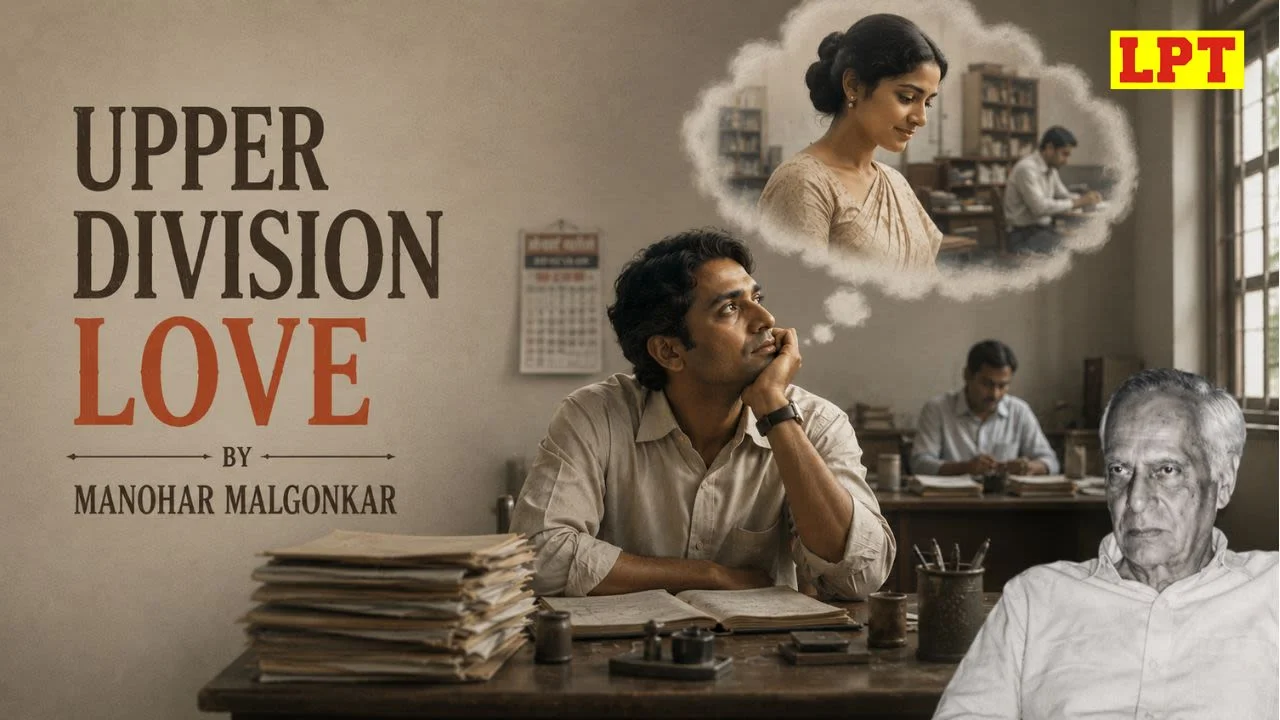
Upper Division Love by Manohar Malgonkar is a thoughtful short story that explores middle-class aspirations, office culture, loneliness, imagination, and social status through the emotions of an ordinary office clerk. The story presents how personal dreams and romantic fantasies often collide with reality in everyday life.
The main character’s thoughts, behavior, and emotional expectations reveal deeper human desires for recognition, affection, and escape from routine existence. One of the most important aspects readers notice is how subtly the author uses irony and social observation throughout the narrative.
The theme of Upper Division Love revolves around ambition, emotional longing, class consciousness, and the difference between fantasy and reality.
Let’s go through the complete summary, major characters, literary devices, writing style, important themes, moral, important questions and answers, and everything else students should know about Upper Division Love by Manohar Malgonkar.
Explore The Complete Summaries of Novels, Stories & Essay Notes
Key Details About Upper Division Love Story
| Particular | Details |
|---|---|
| Story Name | Upper Division Love |
| Author | Manohar Malgonkar |
| Original Language | English |
| Main Theme | Social Status, Loneliness, Love, Ambition |
| Writing Style | Realistic, Observational, Satirical |
| Important Literary Elements | Irony, Social Commentary, Characterization |
Upper Division Love Summary
Find the summary of Upper Division Love by Manohar Malgonkar
Beginning
Upper Division Love by Manohar Malgonkar begins inside an ordinary office environment where clerks spend their daily lives doing repetitive paperwork and following rigid routines. The story focuses on a middle-class office clerk whose life appears dull, lonely, and emotionally unfulfilled.
Like many people trapped in monotonous office culture, he dreams of escaping his ordinary existence through imagination and romantic fantasies. His attention gradually becomes centered around a woman connected to the office environment, and he begins building emotional expectations in his mind.
The early part of the story highlights the contrast between reality and imagination. The clerk’s social position, financial limitations, and emotional loneliness shape his behavior and thinking. The office atmosphere itself reflects middle-class aspirations, insecurities, and desire for social recognition. Through subtle observations and irony, the author slowly reveals how deeply the main character wants emotional importance and personal fulfillment in life.
Middle
As the story progresses, the clerk becomes increasingly emotionally involved in his imagined romantic world. Small interactions and ordinary moments begin carrying exaggerated emotional meaning for him. His thoughts move far beyond reality, and he starts believing in possibilities that exist mostly in his imagination rather than in actual circumstances.
The title “Upper Division Love” itself reflects this emotional and social aspiration because the idea of “upper division” symbolizes status, promotion, and movement toward a more desirable life.
The office setting becomes more than just a workplace; it becomes a symbol of social structure, personal insecurity, and middle-class emotional struggle.
Ending
Towards the ending, the story brings the reader back firmly to reality. The romantic dreams and emotional expectations created by the clerk fail to match the practical world around him. The emotional illusion that appeared meaningful in his imagination begins collapsing under ordinary circumstances. The ending carries subtle irony because the character realizes, directly or indirectly, how disconnected his fantasies were from reality.
Instead of creating dramatic tragedy, Manohar Malgonkar keeps the conclusion realistic and emotionally restrained. This makes the story more powerful because it reflects real human behavior and everyday disappointment naturally.
The ending leaves readers thinking about loneliness, social aspirations, emotional insecurity, and the way ordinary people search for meaning and escape within repetitive lives. The story ultimately presents a realistic picture of human imagination, middle-class emotional struggles, and the difference between fantasy and practical reality.
Short Summary of Upper Division Love by Manohar Malgonkar
Upper Division Love is a realistic short story about an ordinary office clerk who lives a lonely and routine-driven life. To escape boredom and emotional emptiness, he begins building romantic fantasies and emotional expectations connected with a woman in his office environment.
As the story progresses, his imagination slowly separates from practical reality, revealing themes like middle-class aspirations, loneliness, social status, emotional insecurity, and illusion. Through subtle irony and social observation, Manohar Malgonkar shows how ordinary people often create emotional fantasies to find meaning and escape from monotonous lives and rigid social structures.
Upper Division Love PDF
Looking for the Upper Division Love PDF by Manohar Malgonkar? Click below to download the summary PDF:
About the Author Manohar Malgonkar
Manohar Malgonkar was a well-known Indian novelist, short story writer, and military historian recognized for his realistic storytelling and deep understanding of Indian society, politics, and human psychology. He was born in 1913 and became popular for writing stories that combined social observation with emotional depth and subtle satire. His works explored themes like middle-class life, ambition, war, power, loneliness, and changing social structures in India.
Malgonkar’s writing style is simple yet layered, which makes his stories accessible while still carrying deeper meaning beneath ordinary situations. He had a strong ability to portray human emotions, aspirations, and insecurities realistically without using overly complicated language.
Apart from short stories, he also wrote several important novels including:
- Bandicoot Run
- Shalimar
- The Devil’s Wind
- Spy in Amber
- A Bend in the Ganges
- The Princes
- A Combat of Shadows
- Distant Drum
- The Sea Hawk: Life and Battles of Kanhoji Angrey
Main Characters in Upper Division Love by Mahohar Malgonkar
These are the primary characters:
The Office Clerk
The office clerk is the central character of the story and represents the ordinary middle-class employee trapped within routine office life. He is emotionally lonely, ambitious, imaginative, and deeply affected by social status and recognition. Much of the story revolves around his fantasies, emotional expectations, and inner thoughts.
His character symbolizes the emotional struggles and aspirations of common middle-class individuals who seek meaning, affection, and escape through imagination while living within rigid social and professional structures.
The Woman Character
The woman connected to the office environment becomes the emotional focus of the clerk’s imagination and romantic expectations. Although her actual role in the story remains limited and realistic, the clerk emotionally enlarges her importance within his fantasy world.
Her character symbolizes emotional desire, social aspiration, and the difference between reality and imagination. Through her presence, the story highlights how loneliness and emotional dissatisfaction can lead individuals to create unrealistic expectations.
The Office Environment
The office itself functions almost like an important symbolic character in the story. It represents monotony, middle-class struggle, hierarchy, routine, and social pressure. The repetitive office culture influences the clerk’s emotional condition and desire for escape.
The office atmosphere symbolizes how ordinary professional environments can create emotional emptiness, frustration, and suppressed personal aspirations among employees.
Read Short Story Summaries
Read concise and student-friendly summaries of famous short stories along with themes, moral lessons, literary devices, and important questions:
Themes of Upper Division Love
- Middle-Class Aspirations: The story highlights how middle-class individuals constantly dream of social improvement, emotional fulfillment, and recognition beyond their ordinary lives.
- Loneliness and Emotional Isolation: The clerk’s imagination and fantasies reveal deep emotional loneliness hidden beneath routine office life and social behavior.
- Reality vs Imagination: One of the central themes of the story is the conflict between emotional fantasy and practical reality.
- Social Status and Hierarchy: The idea of “upper division” symbolizes ambition, promotion, prestige, and desire for a socially better life.
- Office Culture and Routine: The story presents office life as repetitive, emotionally exhausting, and psychologically limiting for ordinary employees.
- Human Desire for Escape: The main character uses imagination and emotional fantasy as a temporary escape from boredom and dissatisfaction.
- Irony of Human Expectations: The story subtly shows how human expectations and fantasies often fail to match practical reality.
Upper Division Love Literary Devices
These are the literary devices used in Upper Division Love short story by Mahohar Malgonkar:
| Literary Device | How It Is Used in the Story |
|---|---|
| Irony | The story uses irony to show the gap between the clerk’s fantasies and actual reality. |
| Symbolism | “Upper Division” symbolizes social status, ambition, and the desire for a better life. |
| Satire | The office environment and middle-class aspirations are presented with subtle social satire. |
| Characterization | The author develops the clerk’s emotional world and personality through detailed observations and thoughts. |
| Realism | The story realistically portrays office culture, loneliness, and middle-class struggles without exaggeration. |
| Contrast | The difference between imagination and reality creates emotional and thematic contrast throughout the story. |
| Social Commentary | The narrative indirectly comments on class consciousness, emotional isolation, and routine professional life. |
Why Read Upper Division Love Story?
Upper Division Love remains highly relevant because it combines emotional depth, realism, social observation, and subtle irony within a short and engaging narrative.
- Improves Reading Comprehension: The story improves your ability to understand emotions, hidden meanings, tone, and character psychology carefully while reading.
- Develops Interpretation Skills: The narrative contains indirect emotional and social commentary that strengthens inference-making and analytical reading ability naturally.
- Helps in Understanding Irony and Satire: The story subtly uses irony and social satire, which improves understanding of author attitude and deeper narrative meaning.
- Builds Awareness of Human Psychology: The clerk’s fantasies, loneliness, and emotional expectations help readers understand human behavior and emotional insecurity realistically.
- Improves Literary Analysis Skills: The story is excellent for understanding themes, symbolism, characterization, realism, and social commentary in English literature.
Explore the Best Novels for IPMAT Preparation
Important Questions and Answers From Upper Division Love
Who is the author of Upper Division Love?
Upper Division Love was written by Manohar Malgonkar, a well-known Indian novelist and short story writer famous for realistic storytelling, social commentary, and deep understanding of human psychology and middle-class life.
What is the main theme of Upper Division Love?
The main theme of the story is the conflict between imagination and reality. It also explores middle-class aspirations, loneliness, social status, emotional insecurity, office culture, and the human desire for emotional fulfillment within ordinary life.
Why is the story called Upper Division Love?
The title symbolizes both romantic imagination and social aspiration. “Upper Division” represents higher social position, promotion, prestige, and the emotional desire to rise above ordinary life and routine office existence.
What type of story is Upper Division Love?
It is a realistic and socially reflective short story. The narrative focuses on ordinary middle-class life, emotional imagination, social hierarchy, and psychological observation through subtle irony and realistic office settings.
How does the Upper Division Love portray loneliness?
The main character’s emotional fantasies and exaggerated expectations reveal his inner loneliness and desire for connection. The story shows how emotionally isolated people often escape into imagination to cope with ordinary life.
What is the writing style of Manohar Malgonkar in this story?
Manohar Malgonkar uses a realistic, observation-based, and slightly satirical writing style. His narration remains simple yet emotionally layered, making ordinary situations psychologically meaningful and socially relevant.
How does the story reflect middle-class aspirations?
The clerk’s thoughts and fantasies represent the emotional and social ambitions of middle-class individuals who seek recognition, affection, and escape from routine life despite limited circumstances.
What is the central idea of Upper Division Love?
The central idea is that people often create emotional fantasies and unrealistic expectations to escape boredom, loneliness, and dissatisfaction within ordinary social and professional life.
Why is Upper Division Love important for students?
The story improves reading comprehension, interpretation skills, understanding of irony, character analysis, and literary appreciation. It also helps readers understand human psychology and social behavior realistically.
What message does Upper Division Love give readers?
The story teaches that emotional fantasies and social ambitions often differ from practical reality. It also highlights loneliness, human insecurity, and the emotional struggles hidden within ordinary lives.
Is Upper Division Love a satirical story?
Yes, the story contains subtle satire because it indirectly comments on middle-class office culture, social hierarchy, emotional insecurity, and unrealistic aspirations through realistic narration and irony.
Lessons From Upper Division Love (Moral)
Upper Division Love teaches that human beings often create emotional fantasies to escape loneliness, routine life, and social frustration. The story also highlights how unrealistic expectations and imagined relationships can collapse when confronted with reality. It presents a realistic picture of middle-class emotional struggles and social aspirations.
Explore Other Exam Preparation Resources
Prepare smarter with our dedicated coaching programs, preparation guides, mock tests, and study resources for top competitive exams in India.