
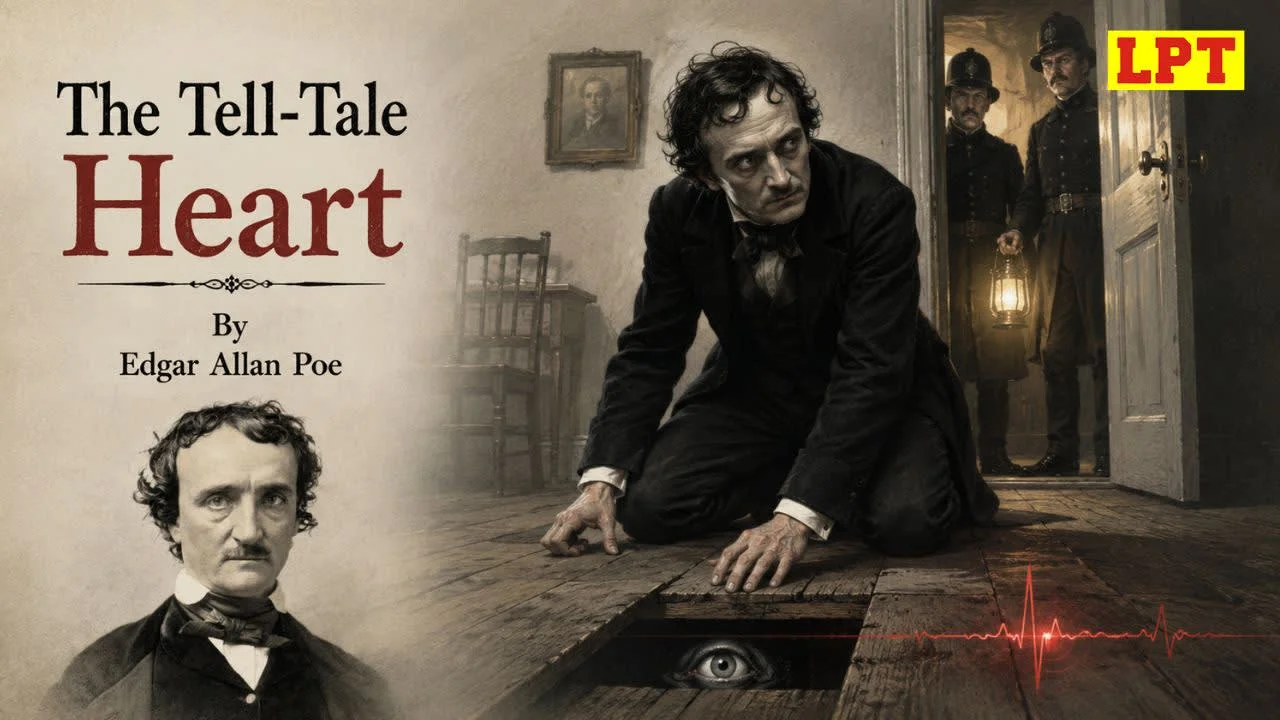
The Tell-Tale Heart by Edgar Allan Poe is one of the most famous psychological horror stories in English literature. The narrative revolves around an unnamed narrator who insists that he is completely sane while describing the murder of an old man whose “vulture-like” eye deeply disturbs him. As the story progresses, guilt, paranoia, fear, obsession, and psychological breakdown slowly take control of the narrator’s mind.
One of the most important aspects readers notice in the summary of The Tell-Tale Heart is how the narrator’s hidden guilt eventually destroys his mental stability and forces him to confess the crime. The story also explores themes like madness, conscience, fear, crime, and the power of the human mind.
Through suspenseful narration, dark atmosphere, and psychological tension, the story creates intense emotional impact. Below, we have covered the complete summary, characters, themes, literary devices, symbolism, important questions and answers, quotes, moral message, and everything else readers should know about The Tell-Tale Heart by Edgar Allan Poe.
Explore The Complete Summaries of Novels, Stories & Essay Notes
Key Details About The Tell-Tale Heart Story
These are the most important things to know about The Tell-Tale Heart by Edgar Allan Poe:
| Story Name | The Tell-Tale Heart |
| Author | Edgar Allan Poe |
| Genre | Psychological Horror / Gothic Short Story |
| Main Themes | Guilt, Madness, Fear, Paranoia |
| Writing Style | Suspenseful, Psychological, Gothic |
| Tone | Dark, Intense, and Disturbing |
| Central Idea | Hidden guilt and obsession can destroy mental peace and stability |
| Main Conflict | The narrator’s psychological battle with fear, guilt, and obsession |
| Important Literary Elements | Symbolism, Suspense, Irony, Repetition |
| Main Focus | Human Conscience and Psychological Breakdown |
Summary of The Tell-Tale Heart by Edgar Allan Poe
Below is the The Tell-Tale Heart by Edgar Allan Poe:
Beginning
The Tell-Tale Heart story begins with an unnamed narrator insisting repeatedly that he is not mad. He claims that his senses, especially his hearing, have become extremely sharp. Although he says he loves the old man and has no desire for his money or possessions, he becomes obsessed with the old man’s pale blue “vulture eye.” According to the narrator, the frightening eye fills him with terror and anger whenever he sees it.
Because of this obsession, the narrator decides to kill the old man to free himself from the disturbing eye forever. For seven nights, he secretly enters the old man’s room at midnight while the old man sleeps. Each night, he carefully opens the door very slowly and shines a small light toward the eye.
However, he cannot carry out the murder because the eye remains closed. The beginning establishes themes like madness, obsession, fear, paranoia, and psychological instability while creating suspense and tension.
Middle
On the eighth night, the narrator accidentally makes a small sound while entering the room, waking the old man. The frightened old man sits awake in darkness, filled with fear and confusion. The narrator remains still for a long time before finally directing the light toward the old man’s eye, which is now open. Seeing the eye again increases the narrator’s obsession and emotional intensity.
Soon, the narrator begins hearing what he believes is the old man’s heartbeat growing louder and louder. The sound becomes unbearable in his mind, and he fears that neighbors might hear it. Driven by panic and psychological disturbance, he suddenly attacks and kills the old man.
After the murder, the narrator carefully hides the body beneath the floorboards and cleans the room completely. He feels proud of his cleverness and believes nobody will discover the crime. Soon afterward, policemen arrive after a neighbor reports hearing a scream during the night. The narrator confidently invites them inside, convinced that he has committed the perfect crime.
Ending
Towards the ending, the narrator speaks calmly with the policemen and even places his chair directly above the hidden body. At first, he feels relaxed and confident because the officers appear unaware of the murder. However, as the conversation continues, the narrator suddenly begins hearing a strange beating sound again.
The sound grows louder and louder inside his mind. The narrator believes it is the dead old man’s heartbeat coming from beneath the floorboards. Although the policemen remain calm, the narrator becomes increasingly nervous, paranoid, and emotionally unstable. He convinces himself that the officers can also hear the sound and are secretly mocking him.
Unable to tolerate the guilt and psychological pressure any longer, the narrator finally breaks down and confesses the crime. He screams for the policemen to tear up the floorboards and reveals the hidden body.
Through suspense, psychological narration, and symbolism, Edgar Allan Poe explores guilt, madness, obsession, fear, and the destructive power of conscience. The story powerfully shows that hidden guilt can eventually destroy mental peace and force truth into the open.
The Tell-Tale Heart Short Summary
The Tell-Tale Heart is a psychological horror story about an unnamed narrator who becomes obsessed with an old man’s pale “vulture eye.” Although he claims to love the old man, the narrator decides to murder him because the eye terrifies him. After carefully planning the crime, he kills the old man and hides the body beneath the floorboards.
When policemen arrive to investigate, the narrator initially feels confident, but guilt and paranoia slowly overpower him. He begins hearing what he believes is the dead man’s heartbeat growing louder beneath the floor. Unable to bear the psychological pressure, he finally confesses the murder.
About the Author Edgar Allan Poe
Edgar Allan Poe was one of the most influential American writers known for horror, mystery, suspense, and psychological fiction. Born in 1809, he became famous for creating dark and emotionally intense stories that explored fear, guilt, madness, death, and the hidden side of the human mind. He is widely considered one of the pioneers of psychological horror and detective fiction.
Poe’s writing style is gothic, suspenseful, emotional, and deeply psychological. He often used first-person narration, dark imagery, repetition, and intense emotional tension to create fear and psychological discomfort within readers. Many of his stories focus on unstable narrators, guilt, obsession, paranoia, and emotional breakdown.
Main Characters in The Tell-Tale Heart Story
Narrator
The narrator is emotionally unstable, obsessive, paranoid, and psychologically disturbed. Although he repeatedly insists that he is sane, his behavior and thoughts reveal deep mental instability. His character symbolizes guilt, obsession, fear, madness, and the destructive power of conscience. Through his first-person narration, readers experience psychological tension directly.
Old Man
The old man is calm, innocent, and physically weak. He has done nothing harmful to the narrator, but his pale blue “vulture eye” becomes the focus of the narrator’s obsession. The old man symbolizes innocence, vulnerability, and the narrator’s irrational fear and psychological disturbance.
Policemen
The policemen appear only toward the end of the story but play an important role in increasing the narrator’s psychological pressure. Their calm behavior contrasts with the narrator’s growing panic and guilt. They symbolize law, reality, and the unavoidable exposure of hidden truth.
Read Short Story Summaries
Read concise and student-friendly summaries of famous short stories along with themes, moral lessons, literary devices, and important questions:
Themes of The Tell-Tale Heart Short Story
- Guilt and Conscience: The story shows how hidden guilt can psychologically destroy a person and force confession despite attempts to hide the truth.
- Madness and Paranoia: The narrator’s unstable thoughts, obsession, and irrational behavior highlight psychological breakdown and mental instability.
- Fear and Obsession: The narrator’s fear of the old man’s eye becomes an unhealthy obsession that ultimately leads to murder and self-destruction.
- Crime and Punishment: Although the narrator temporarily escapes legal punishment, his own conscience psychologically punishes him.
- Appearance vs Reality: The narrator believes he is sane and intelligent, but his actions reveal madness and emotional instability.
- Psychological Conflict: The narrative focuses heavily on inner emotional struggle, fear, anxiety, guilt, and mental pressure.
- Human Mind and Anxiety: The story explores how imagination, fear, and guilt can distort reality and destroy mental peace.
Literary Devices Used in The Tell-Tale Heart
These are the Tell-Tale Heart literary devices:
| Literary Device | How It Is Used in the Story |
|---|---|
| Symbolism | The old man’s “vulture eye” symbolizes fear, obsession, guilt, and psychological disturbance. |
| Suspense | Slow narration, nighttime scenes, and psychological tension create continuous suspense throughout the story. |
| Repetition | Repeated words and phrases increase emotional intensity, panic, and psychological pressure. |
| Irony | The narrator insists he is sane while his behavior clearly reveals madness and instability. |
| Imagery | Dark descriptions of the house, eye, heartbeat, and murder create a frightening atmosphere. |
| First-Person Narration | The personal narration allows readers to experience the narrator’s unstable thoughts and emotions directly. |
| Hyperbole | Exaggerated hearing ability and emotional reactions reflect paranoia and psychological imbalance. |
Why Read The Tell-Tale Heart Story?
The Tell-Tale Heart remains one of the most famous psychological horror stories because it combines suspense, guilt, obsession, and intense psychological narration within a short but unforgettable narrative.
- Improves Understanding of Psychological Fiction: The story deeply explores guilt, paranoia, obsession, and mental instability through realistic emotional narration.
- Develops Suspense Interpretation Skills: The slow buildup of tension and fear helps readers understand how suspense works in literature effectively.
- Helps in Character Analysis: The narrator’s unstable personality provides excellent material for psychological and literary interpretation.
- Improves Reading Comprehension: The emotionally intense narration improves analytical reading and understanding of hidden meaning and symbolism.
- Introduces Gothic and Horror Literature: The story is one of the best introductions to gothic atmosphere, dark imagery, and psychological horror writing.
Explore the Best Novels for IPMAT Preparation
Important Questions and Answers on The Tell-Tale Heart
Who wrote The Tell-Tale Heart?
The Tell-Tale Heart was written by Edgar Allan Poe, one of the most famous writers of psychological horror and gothic fiction. He became widely known for stories that explored fear, madness, guilt, death, and emotional instability.
What is the main theme of The Tell-Tale Heart?
The main theme of the story is guilt and psychological breakdown. The narrative also explores madness, obsession, fear, paranoia, conscience, crime, and the emotional consequences of hiding truth and guilt.
Why does the narrator kill the old man?
The narrator claims he kills the old man because of his pale blue “vulture eye,” which deeply disturbs and frightens him. The murder is driven not by hatred or greed but by irrational obsession and psychological instability.
What does the old man’s eye symbolize?
The old man’s eye symbolizes fear, guilt, obsession, and psychological anxiety. It reflects the narrator’s disturbed mental state and becomes the center of his irrational emotional fixation.
Why does the narrator insist he is sane?
The narrator repeatedly claims he is sane because he believes his careful planning and sharp senses prove intelligence and control. However, his obsessive thoughts and irrational behavior actually reveal mental instability and paranoia.
What role does the heartbeat play in the story?
The heartbeat symbolizes guilt and conscience. Although the old man is dead, the narrator believes he still hears the beating heart beneath the floorboards. This imagined sound reflects growing psychological pressure and emotional breakdown.
Why does the narrator confess the crime?
The narrator confesses because guilt and paranoia become emotionally unbearable. He convinces himself that the policemen can hear the heartbeat and are secretly mocking him, causing him to lose mental control completely.
What is the central idea of the story?
The central idea is that guilt and obsession can destroy mental peace and stability. The story also shows that hidden crimes and emotional pressure eventually reveal themselves through conscience and psychological breakdown.
How does Edgar Allan Poe create suspense in the story?
Edgar Allan Poe creates suspense through slow narration, dark atmosphere, repetition, silence, nighttime scenes, emotional tension, and the narrator’s unstable thoughts and behavior.
Why is the narrator considered unreliable?
The narrator is considered unreliable because his thoughts and perceptions are distorted by obsession and madness. Readers cannot fully trust his understanding of reality because his psychological condition affects his narration.
What message does the story give readers?
The story teaches that guilt cannot remain hidden forever. It also warns that obsession, fear, and psychological instability can destroy peace of mind and lead to self-destruction.
Why is The Tell-Tale Heart considered psychological horror?
The story focuses more on the narrator’s inner fear, guilt, paranoia, and mental breakdown than on physical violence or supernatural horror. The fear comes from the human mind itself.
Moral Message of The Tell-Tale Heart Story
The Tell-Tale Heart teaches that guilt and conscience cannot remain hidden forever. The story shows how obsession, fear, and wrongdoing can destroy mental peace and lead to emotional collapse. It also reminds readers that the human mind itself can become the greatest source of punishment after committing a crime.
The Tell-Tale Heart PDF
Click below to download The Tell-Tale Heart PDF.
Explore Other Exam Preparation Resources
Prepare smarter with our dedicated coaching programs, preparation guides, mock tests, and study resources for top competitive exams in India.