
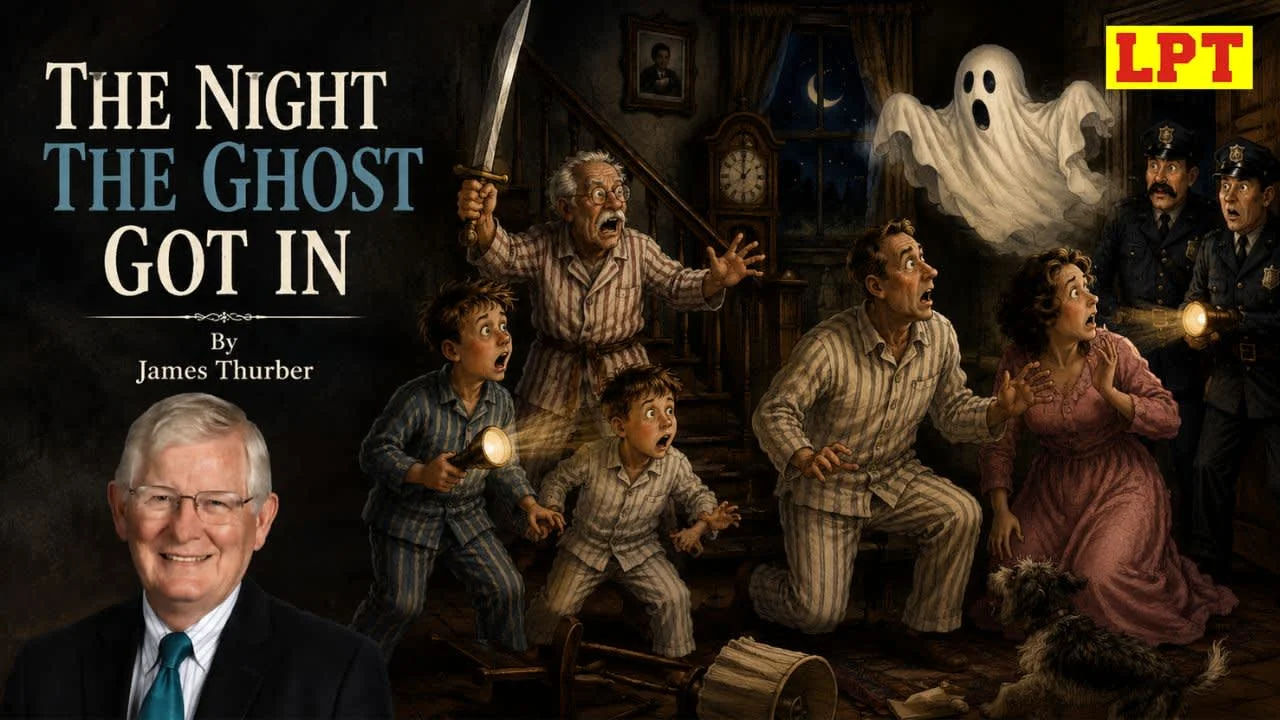
The Night the Ghost Got In by James Thurber is a humorous and entertaining short story that combines suspense, fear, imagination, family chaos, and comedy within a simple nighttime incident. The story revolves around strange noises heard inside a house late at night, which create panic and confusion among family members who begin imagining the presence of a ghost or intruder.
As the situation becomes increasingly chaotic, every character reacts differently, adding humor and exaggeration to the narrative. One of the most memorable aspects readers notice in the summary of the Night the Ghost Got In is how ordinary fear and misunderstanding slowly turn into complete comic confusion. The story also highlights themes like overreaction, imagination, human behavior under fear, and humor within family situations.
Below, we have covered the complete summary, characters, themes, literary devices, symbolism, important questions and answers, quotes, moral message, and everything else readers should know about the Night the Ghost Got In by James Thurber.
Explore The Complete Summaries of Novels, Stories & Essay Notes
Key Details About The Night the Ghost Got In
These are the most important things to know about The Night the Ghost Got In short story:
| Particular | Details |
|---|---|
| Story Name | The Night the Ghost Got In |
| Author | James Thurber |
| Main Themes | Fear, Imagination, Humor, Family Chaos |
| Setting | Family House at Night |
| Writing Style | Conversational, Comic, Suspenseful |
| Tone | Funny and Chaotic |
| Central Idea | Fear and imagination can turn ordinary situations into comic confusion |
| Main Conflict | Family panic caused by misunderstanding and imagined danger |
| Important Literary Elements | Humor, Irony, Hyperbole, Suspense |
| Main Focus | Human Reactions Under Fear |
| Narrative Style | First-Person Humorous Narration |
| Best For Students | Reading Comprehension, Tone & Literary Analysis |
The Night the Ghost Got In Summary
Below is the summary of The Night the Ghost Got In by James Thurber:
Beginning
The Night the Ghost Got In begins on a quiet night when the narrator, James Thurber, suddenly hears strange footsteps and unusual noises coming from downstairs in the house. The sounds seem mysterious and frightening because everyone else in the family appears to be asleep.
At first, the narrator suspects that a burglar or ghost may have entered the house. The dark and silent atmosphere increases tension and uncertainty.
Alarmed by the strange sounds, James wakes up his brother Herman, and together they begin investigating cautiously. Fear and imagination quickly influence their thinking, making the ordinary noises appear more dangerous than they actually are.
Soon the entire family becomes involved, and confusion begins spreading throughout the house. The beginning of the story establishes themes like fear, imagination, misunderstanding, panic, and family chaos while also preparing readers for the humorous events that follow.
Middle
As the story progresses, the situation becomes increasingly chaotic and funny. The family members react emotionally and irrationally to the mysterious sounds. Their mother becomes frightened, while confusion spreads rapidly through the house. Instead of calmly understanding the situation, everyone starts imagining frightening possibilities. The atmosphere becomes a mixture of suspense and comedy.
The confusion grows even larger when Grandfather suddenly appears carrying an old Civil War sword, believing intruders have entered the house. His dramatic behavior adds another layer of humor and exaggeration to the situation. Meanwhile, the noises continue, increasing panic among the family members.
Soon, policemen arrive at the house after hearing reports about possible burglars or disturbance. Instead of solving the confusion immediately, their arrival creates even more comic disorder. The policemen begin searching the house seriously while family members continue reacting emotionally and unpredictably. The middle section highlights how fear and imagination can transform a small misunderstanding into complete chaos.
James Thurber uses exaggeration, comic timing, and realistic family behavior to make the situation highly entertaining.
Ending
Towards the ending, the mystery behind the noises is finally discovered. There was actually no ghost, burglar, or dangerous intruder in the house. The strange sounds were caused by harmless and ordinary circumstances that had been exaggerated by fear and imagination. The entire night of panic, police involvement, and dramatic reactions turns out to be unnecessary.
The realization creates humor because readers understand how ordinary human fear can quickly become irrational and exaggerated. Grandfather’s dramatic actions, the family’s panic, and the policemen’s involvement all become comic rather than frightening in hindsight.
The story ends on a humorous note while also presenting a subtle message about imagination, overreaction, and human behavior under fear. Through realistic family interactions, exaggeration, and comic suspense, the narrative shows how easily people can lose logic during moments of confusion and panic. The combination of suspense and humor makes the story entertaining, memorable, and emotionally engaging.
Short Summary of The Night the Ghost Got In
The Night the Ghost Got In is a humorous story about a family that becomes terrified after hearing strange noises inside the house late at night. The narrator and his brother initially suspect a ghost or burglar, and soon the entire family becomes involved in confusion and panic. Grandfather appears dramatically with a sword, while policemen arrive to investigate the situation, making the chaos even funnier.
Eventually, the mysterious sounds turn out to be harmless, and the entire situation becomes a comic example of overreaction and imagination. Through humor and exaggeration, James Thurber explores fear, misunderstanding, panic, and family behavior.
About the Author James Thurber
James Thurber was a famous American writer, cartoonist, and humorist known for his witty storytelling and comic portrayal of ordinary life. Born in 1894, he became highly popular for his humorous short stories, essays, and cartoons that explored family situations, misunderstandings, fear, imagination, and human behavior in entertaining ways.
Thurber’s writing style is conversational, exaggerated, humorous, and highly engaging. He often transformed simple everyday situations into comic adventures through clever narration and exaggerated reactions. Many of his stories focus on human confusion, panic, imagination, and family chaos while maintaining warmth and humor throughout the narrative.
His works remain highly valuable for students because they improve reading comprehension, tone understanding, interpretation of humor, and appreciation of comic writing. His ability to mix suspense with comedy made him one of the most memorable humor writers in American literature.
Main Characters in The Night the Ghost Got In
The characters include:
James Thurber / Narrator
The narrator, James Thurber, is observant, curious, and imaginative. His reaction to the strange noises begins the entire chain of confusion inside the house. Through his first-person narration, readers experience both suspense and humor together. His character symbolizes ordinary human fear and the tendency to imagine danger during uncertain situations.
Herman
Herman is the narrator’s brother and becomes involved in investigating the mysterious noises. He reacts seriously to the situation and contributes to the growing tension and confusion inside the house. His character adds realism and helps strengthen the comic partnership between the brothers during the chaotic events.
Mother
The mother reacts emotionally and fearfully after hearing about the possible intruder. Her anxiety increases the atmosphere of panic within the family. She represents how fear spreads quickly among people during uncertain situations and contributes significantly to the humorous family chaos.
Grandfather
Grandfather is one of the funniest and most memorable characters in the story. He dramatically appears carrying an old sword and behaves as though a serious attack is taking place. His exaggerated reaction symbolizes panic, imagination, and comic overreaction under fear.
Policemen
The policemen arrive to investigate the supposed disturbance but unintentionally increase the confusion and humor. Their serious behavior contrasts with the ridiculous situation, adding comic irony to the narrative. They symbolize authority reacting to exaggerated misunderstandings.
Read Short Story Summaries
Read concise and student-friendly summaries of famous short stories along with themes, moral lessons, literary devices, and important questions:
The Night the Ghost Got In Themes
- Fear and Imagination: The story shows how fear and imagination can transform ordinary sounds into frightening and exaggerated situations.
- Humor in Confusion: Much of the comedy comes from misunderstandings, panic, and the chaotic reactions of family members during uncertainty.
- Family Chaos: The narrative realistically portrays how families often react emotionally and irrationally during stressful or confusing moments.
- Overreaction and Panic: The story highlights how people sometimes lose logical thinking when fear and imagination take control.
- Suspense Mixed with Comedy: The narrative combines tension and humor together, making the frightening situation entertaining rather than truly scary.
- Human Behavior Under Fear: Different characters react differently to the same situation, revealing natural human emotions like panic, confusion, and excitement.
- Misunderstanding and Confusion: The entire chaos begins because harmless noises are misunderstood as dangerous threats, creating comic confusion.
The Night the Ghost Got In Literary Devices
The literary devices used in The Night the Ghost Got In include humor, irony, hyperbole, suspense, characterization, etc.
| Literary Device | How It Is Used in the Story |
|---|---|
| Humor | The story uses comic situations, exaggerated reactions, and family chaos to create continuous entertainment. |
| Irony | The family reacts dramatically to a harmless situation, creating strong comic irony throughout the narrative. |
| Hyperbole | Exaggerated fear, panic, and dramatic behavior increase the humorous effect of the story. |
| Suspense | Strange noises and nighttime mystery create tension before the humorous truth is revealed. |
| Characterization | Each family member reacts differently, helping develop personality and comic contrast naturally. |
| Imagery | Descriptions of dark rooms, footsteps, swords, and confusion create vivid and entertaining scenes. |
| First-Person Narration | The narrator’s personal perspective makes the humor and confusion feel more realistic and engaging. |
Explore the Best Novels for IPMAT Preparation
The Night the Ghost Got In: Questions and Answers
Who wrote The Night the Ghost Got In?
The Night the Ghost Got In was written by James Thurber, a famous American author known for humorous storytelling, comic exaggeration, and entertaining portrayals of ordinary family situations and human behavior.
What is the main theme of The Night the Ghost Got In?
The main theme of the story is fear and imagination. The narrative also explores panic, misunderstanding, family chaos, overreaction, humor, and the way ordinary situations can become exaggerated when people allow fear to control their thinking.
What caused the confusion in the story?
The confusion began when the narrator heard strange noises downstairs late at night. The mysterious sounds created fear and suspicion, leading family members to imagine the presence of a ghost or burglar inside the house.
Why did the family think there was a ghost or intruder?
The unusual noises heard during the silent nighttime atmosphere frightened the family members. Because they did not immediately understand the real cause of the sounds, their imagination and fear made the situation appear dangerous and mysterious.
Who is the narrator of the story?
The narrator is James Thurber himself. He tells the story from a first-person perspective, allowing readers to experience the suspense, panic, confusion, and humor directly through his observations and reactions.
What role does Grandfather play in the story?
Grandfather is one of the funniest characters in the narrative. He dramatically appears with an old Civil War sword and behaves as though the family is facing a serious attack. His exaggerated reaction increases the humor and chaos within the story.
Why do the policemen arrive at the house?
The policemen arrive because the disturbance and confusion make people suspect criminal activity or danger inside the house. Instead of calming the situation immediately, their serious investigation adds even more humor and confusion.
What is the irony in The Night the Ghost Got In?
The irony lies in the fact that the family reacts with extreme fear and dramatic behavior even though there is no real ghost or dangerous intruder. The harmless situation becomes unnecessarily chaotic because of imagination and panic.
How does James Thurber create humor in the story?
James Thurber uses exaggeration, comic timing, realistic family reactions, suspense, and misunderstanding to create humor. The contrast between fear and the harmless reality makes the story especially funny.
What is the central idea of the story?
The central idea is that fear and imagination can make ordinary situations appear dangerous and dramatic. The story also shows how people often overreact during confusion and uncertainty.
Why is the story considered humorous?
The story becomes humorous because every character reacts emotionally and dramatically to a harmless situation. The exaggerated panic, family chaos, and unnecessary police involvement create comic entertainment throughout the narrative.
What message does the story give readers?
The story teaches readers not to panic quickly during uncertain situations. It also shows that imagination and fear can distort reality and create unnecessary confusion and misunderstanding.
How does the ending strengthen the humor of the story?
The ending becomes funny because readers discover that the entire night of panic and dramatic reactions was caused by harmless circumstances. This realization highlights the absurdity of the family’s overreaction and strengthens the story’s comic effect.
Moral Message of The Night the Ghost Got In
The Night the Ghost Got In teaches that fear and imagination can easily turn ordinary situations into unnecessary panic and confusion. The story also reminds readers to remain calm during uncertainty because overreaction and misunderstanding often create bigger problems than the actual situation itself.
The Night the Ghost Got In PDF
Download PDF of The Night the Ghost Got In by James Thurber.
Explore Other Exam Preparation Resources
Prepare smarter with our dedicated coaching programs, preparation guides, mock tests, and study resources for top competitive exams in India.