 Talk to a Counsellor
IPM/BBA:
Talk to a Counsellor
IPM/BBA:  Support
GMAT Preparation 2026-27: Strategy, Plan & Books
Last Updated on 29 Jun 2026

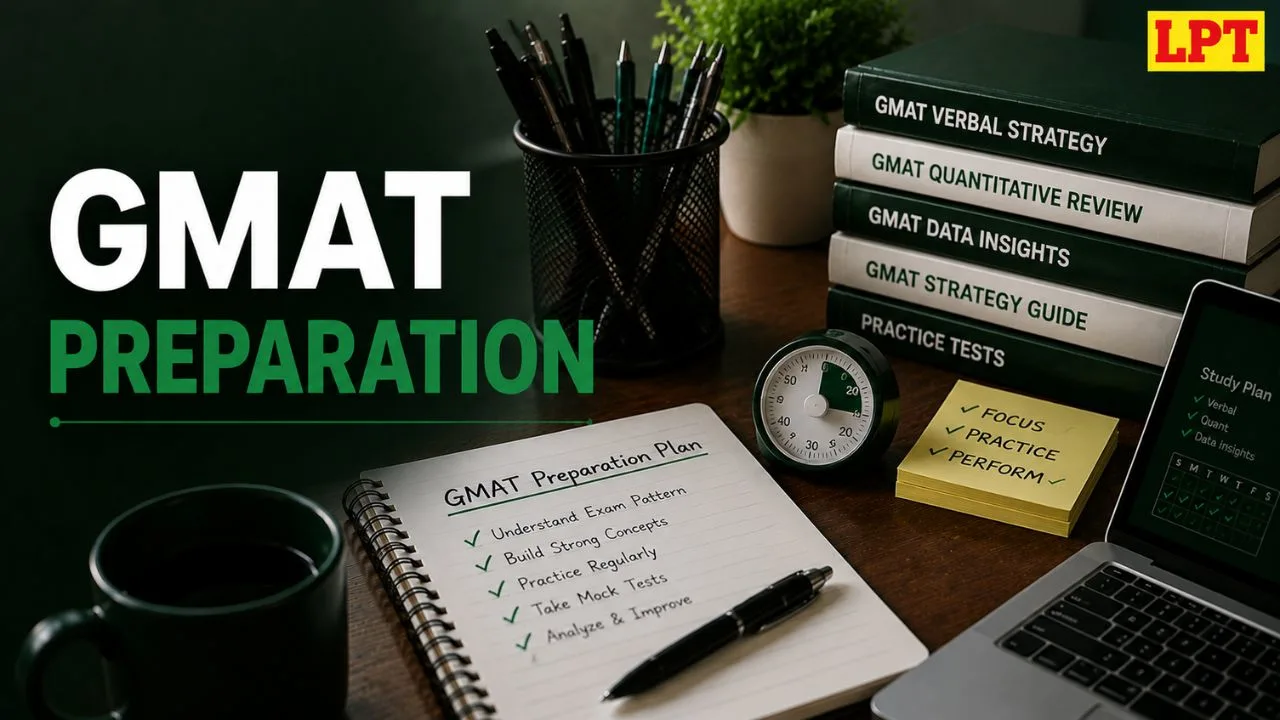
Scoring well on the GMAT requires a combination of smart planning, consistent practice, and effective time management. The GMAT Focus Edition contains 64 questions across 3 sections: Verbal Reasoning (23 questions), Quantitative Reasoning (21 questions), and Data Insights (20 questions) to be completed in 2 hours 15 minutes. Since every section contributes to the final score, a structured GMAT preparation approach is essential.
A well-designed GMAT study plan helps candidates balance concept building, revision, and mock-test practice. Whether you are following a GMAT study plan for 1 month, 3 months, or 6 months, regular GMAT practice questions and mock tests play a crucial role in score improvement. Using the GMAT Official Guide, preparation books, and reliable GMAT free resources can help strengthen all sections of the exam.
Table Of Contents
- CLAT PG: All About CLAT Postgraduate Exam for LLM
GMAT Focus Edition Preparation: Tips for Every Section
A strong GMAT Focus Edition preparation strategy requires a section-wise approach. Follow a reliable GMAT preparation guide, use available resources, and stick to a structured GMAT daily study plan. This method is also effective for GMAT preparation without coaching.
Verbal Reasoning (23 Questions | 45 Minutes)
- Focus on Reading Comprehension and Critical Reasoning.
- A strong GMAT verbal preparation strategy should include reading practice and argument analysis.
- Solve GMAT practice questions to improve accuracy and comprehension.
- Review mistakes regularly and identify logical flaws in arguments.
Quantitative Reasoning (21 Questions | 45 Minutes)
- Build strong fundamentals in arithmetic, algebra, percentages, and ratios.
- Practice topic-wise GMAT practice questions regularly.
- Focus on concept clarity and timed practice.
- Revise weak areas as part of your GMAT preparation strategy.
Data Insights (20 Questions | 45 Minutes)
- Practice questions based on tables, charts, and multi-source reasoning.
- Take a GMAT mock test to improve data interpretation skills.
- Learn to identify relevant information quickly.
Key Tips for Effective GMAT Preparation
- Use trusted GMAT preparation books and the GMAT Official Guide.
- Follow a structured GMAT study schedule.
- Analyse mock-test performance to improve your score.
- Develop a strong GMAT time management strategy for test day.
Check out the full GMAT Syllabus
GMAT Preparation Tips to Maximise Your Score
A high GMAT score requires a clear strategy and consistent effort. The techniques below can help improve accuracy, time management, and overall performance through regular practice and GMAT mock tests.
Take a Diagnostic Test
- Begin your GMAT preparation with a diagnostic test.
- Identify strengths and weaknesses across all sections.
- Use the results to create a realistic GMAT preparation plan.
- Prioritise topics that need the most improvement.
Understand the Exam Structure
- Learn the GMAT Focus Edition format and scoring system.
- Understand section-wise question types and time limits.
- Build an effective GMAT preparation schedule based on the exam pattern.
Strengthen Fundamentals
- Focus on core Quantitative and Verbal concepts.
- Master arithmetic, algebra, reading comprehension, and critical reasoning.
- GMAT preparation for beginners should start with basic concepts.
- Move to advanced topics only after building a strong foundation.
Follow a Structured Study Plan
- Create a realistic GMAT study plan.
- Allocate time for learning, revision, practice, and mock tests.
- Set weekly and monthly goals.
Focus on Weak Areas
- Identify topics where you lose marks consistently.
- Analyse mistakes from practice sessions.
- Spend extra time improving weak concepts.
- Track progress regularly.
Practice Questions Regularly
- Use a reliable GMAT question bank.
- Review both correct and incorrect answers.
- Learn faster and more efficient solution methods.
- Improve accuracy and problem-solving skills.
Maintain an Error Log
- Create an error log as part of your GMAT self study guide.
- Record mistakes and their causes.
- Review the log regularly.
- Avoid repeating the same errors.
Take Regular Mock Tests
- Attempt a GMAT mock test every few weeks.
- Assess your performance under exam conditions.
- Improve concentration and exam stamina.
- Update your study plan based on test results.
Improve Time Management
- Develop a strong GMAT time management strategy.
- Set time limits for practice questions.
- Avoid spending too much time on difficult questions.
- Learn to balance speed and accuracy.
Use Smart Test-Taking Techniques
- Apply the elimination method on difficult questions.
- Remove clearly incorrect options first.
- Increase the probability of selecting the correct answer.
- Save valuable exam time.
Practice Online
- Use free online GMAT preparation resources regularly.
- Get familiar with the test interface.
- Improve navigation and test-taking confidence.
- Build comfort with the computer-based format.
Strengthen Data Interpretation Skills
- Practice questions involving charts, tables, and graphs.
- Improve analytical and reasoning abilities.
- Develop faster data interpretation skills.
- Prepare effectively for Data Insights questions.
Increase Practice Before the Exam
- Increase mock tests and revision sessions closer to the exam.
- Focus on weak areas while maintaining strengths.
- Practice under timed conditions.
- Improve overall exam readiness.
Simulate Real Exam Conditions
- Take practice tests in a quiet environment.
- Follow actual exam timing and break schedules.
- Build confidence for test day.
- Reduce exam-related stress.
Stay Consistent
- Follow your GMAT preparation timeline consistently.
- Review progress every week.
- Maintain daily study habits.
Explore GMAT Cutoff Details
1 Month GMAT Study Plan
A 1-month GMAT study plan works best when preparation is structured, focused, and driven by regular practice. With only 30 days available, every study session should have a clear purpose, from concept building to mock test analysis.
- Week 1: Take a diagnostic test. Learn the exam pattern. Build fundamentals in Quant, Verbal, and Data Insights.
- Week 2: Solve GMAT practice questions. Strengthen concepts. Review mistakes regularly.
- Week 3: Take a GMAT mock test. Identify weak areas. Improve time management.
- Week 4: Focus on revision. Review the error log. Take 1-2 mock tests and simulate exam conditions.
Key Tips: Study in focused sessions. Analyse every mock test. Maintain an error log. Take planned breaks.
Key Difference Between GMAT Online vs In-Person Exam
2 Months GMAT Study Plan
A GMAT study plan for 2 months is ideal for candidates who can dedicate consistent study time and follow a structured preparation schedule. The key is to balance concept learning, practice, mock tests, and revision across eight weeks.
- Week 1–2: Understand the exam and build fundamentals using official GMAT study material.
- Week 3–4: Improve speed and accuracy through timed practice. Cover advanced topics.
- Week 5–6: Focus on weak areas. Solve GMAT sample questions. Take a GMAT mock test.
- Week 7–8: Revise concepts, formulas, and strategies. Focus on exam readiness.
Key Tips: Analyse mock tests carefully. Follow a consistent GMAT study schedule. Maintain a balanced routine.
3 Months GMAT Study Plan
A GMAT study plan for 3 months gives you enough time to build concepts, improve accuracy, and develop strong test-taking skills. The ideal approach is to divide preparation into three stages: concept building, application, and exam readiness.
- Month 1: Build strong fundamentals. Create notes and maintain an error log.
- Month 2: Solve mixed-topic questions. Improve application skills and speed.
- Month 3: Take regular GMAT mock tests. Revise formulas and focus on weak areas.
Key Tips: Take a mock test every two weeks. Follow a structured GMAT preparation timeline. Focus on quality learning and weekly revision.
6 Months GMAT Study Plan
A GMAT study plan of 6 months is ideal for candidates who want to prepare gradually while balancing work, academics, or other commitments. With six months in hand, you can focus on concept mastery, regular practice, and continuous improvement without feeling rushed.
- Months 1–2: Learn concepts and understand the exam structure.
- Months 3–4: Strengthen concepts through sectional practice and timed exercises.
- Months 5–6: Increase mock tests. Refine pacing and revise important topics.
Key Tips: Follow a regular GMAT study schedule. Maintain revision notes. Build stamina through full-length tests.
Explore MBA Colleges
| MBA Colleges in India | MBA Colleges Kolkata |
| MBA Colleges Chennai |
GMAT Study Plan for Working Professionals
Managing a full-time job and GMAT preparation together requires smart planning. Instead of studying for long hours, focus on consistency and a realistic schedule. A structured GMAT study plan can help working professionals prepare effectively without disrupting their work-life balance.
- Weekdays: Dedicate 1–2 hours daily to concept learning, revision, and GMAT practice questions.
- Weekends: Spend more time on sectional tests, revision, and a GMAT mock test to track progress.
Key Tips: Follow a realistic GMAT study schedule, use short study blocks effectively, maintain an error log, and focus on weak areas. Consistent effort is essential for successful GMAT preparation for working professionals.
GMAT Retake Preparation Strategy
A second attempt can help you achieve a significantly higher score if you focus on improving your previous mistakes rather than repeating the same study approach. A well-planned GMAT retake strategy should focus on analysis, targeted practice, and consistent revision.
- Analyse Previous Performance: Review your GMAT score report and identify weak sections, question types, and pacing issues. Use the ESR report, if available, for deeper insights.
- Set a Target Score: Define a realistic score goal and create a focused GMAT preparation plan to achieve it.
- Improve Weak Areas: Spend more time on topics where you consistently make mistakes. Continue revising strong areas alongside weak ones.
- Take Regular Mock Tests: Schedule a GMAT mock test every one to two weeks. Analyse results carefully and adjust your preparation strategy.
- Maintain an Error Log: Record mistakes and review them regularly. This is one of the most effective ways to understand how to improve GMAT score.
Key Tips: Use trusted GMAT preparation resources, follow a strong GMAT time management strategy, maintain a consistent GMAT study schedule, and focus on steady improvement rather than last-minute preparation.
Important Resources for MBA Aspirants
| CAT 2026 Details | FMS Delhi Ranking |
| XAT Exam Pattern | ISB Hyderabad Eligibility |
Important Things to Keep in Mind for Effective GMAT Preparation
At different stages, effective GMAT preparation requires different strategies. The approach you follow before starting, during preparation, in the final weeks, and on exam day can directly impact your performance. Keeping these important GMAT preparation tips in mind will help you stay organised, avoid common mistakes, and make your GMAT study plan more effective.
Before You Begin GMAT Preparation
- Create a realistic GMAT preparation plan and target score.
- Take a diagnostic GMAT mock test to assess your level.
- Choose a study plan that fits your GMAT preparation time.
- Use trusted GMAT books and the GMAT Official Guide PDF.
- GMAT preparation for working professionals should follow a flexible schedule.
While Preparing for the GMAT
- Follow a consistent GMAT study schedule.
- Solve GMAT sample questions regularly.
- Focus on GMAT verbal, quantitative and data insights preparation.
- Use a strong GMAT time management strategy.
- Take a GMAT mock test regularly.
During the Final Phase of Preparation
- Focus on revision and mock-test analysis.
- Practice section-wise tests and improve weak areas.
- Refine your GMAT section order strategy.
One Day Before the GMAT Exam
- Follow important GMAT exam day tips.
- Review notes from your GMAT preparation material.
- Keep documents ready and avoid new topics.
- Follow these GMAT last day tips and get proper rest before the exam.
Check GMAT Colleges
GMAT Exam Pattern and Section-Wise Breakdown
Understanding the exam pattern is an important part of GMAT preparation. The GMAT Focus Edition includes 64 questions across 3 sections and is completed in 2 hours 15 minutes. A structured GMAT study plan PDF can help candidates learn how to prepare for GMAT Focus Edition effectively.
| GMAT Section | No. of Questions | Assessment Areas | Duration | Overall Score Range |
|
Verbal Reasoning |
23 |
Reading Comprehension, Critical Reasoning |
45 Minutes |
60-90 |
|
Quantitative Reasoning |
21 |
Problem Solving, Arithmetic, Elementary Algebra |
45 Minutes |
60-90 |
|
Data Insights |
20 |
Data Sufficiency, Multi-Source Reasoning, Table Analysis, Graphics Interpretation, Two-Part Analysis |
45 Minutes |
60-90 |
|
Total |
64 Questions |
3 Sections |
2 Hours 15 Minutes (Including Optional 10-Minute Break) |
205-805 |
Explore MBA College Comparisons
Best Books for GMAT Preparation
Choosing the right GMAT preparation books can make your preparation more effective. Resources such as the GMAT Official Guide, Kaplan GMAT Prep Plus, and Manhattan Prep Strategy Guides help candidates strengthen concepts, improve accuracy, and build a solid test-taking strategy.
Best GMAT Preparation Books for Different Levels
These best books for GMAT preparation on your current level help you understand exam fundamentals, question types, and core concepts:
| Preparation Level | Recommended GMAT Preparation Books | Best For |
|
Beginners |
GMAT Official Guide, Kaplan GMAT Prep Plus |
Building fundamentals and understanding GMAT question types |
|
Intermediate |
Manhattan Prep Strategy Guides |
Strengthening Quant and Verbal concepts through practice |
|
Advanced |
GMAT Official Advanced Questions, Veritas Prep Course Set, Advanced GMAT Quant |
Advanced-level practice and score improvement |
Best Books for GMAT Analytical Writing Assessment (AWA)
Books such as Analytical Writing Assessment: Verbal Review (GMAC) and Kaplan GMAT Verbal Workbook help candidates improve essay structure, argument evaluation, and analytical writing skills required for the AWA section.
| Book Name | Key Benefits |
|
Analytical Writing Assessment: Verbal Review (GMAC) |
Essay structure, argument analysis, and writing strategies |
|
Kaplan GMAT Verbal Workbook |
Analytical writing exercises, sample essays, and detailed explanations |
Best Books for GMAT Integrated Reasoning (IR)
Resources like Manhattan Prep GMAT Integrated Reasoning and GMAT Integrated Reasoning and Essay provide targeted practice for data analysis, graphics interpretation, and multi-source reasoning questions.
| Book Name | Key Benefits |
|
Manhattan Prep GMAT Integrated Reasoning |
Covers all IR question types with practice sets |
|
GMAT Integrated Reasoning and Essay |
Data analysis, graphics interpretation, and multi-source reasoning |
Best Books for GMAT Quantitative Reasoning
For Quant preparation, GMAT Official Guide Quantitative Review and Manhattan Prep GMAT Quantitative Strategy Guide Set offer comprehensive coverage of arithmetic, algebra, geometry, and problem-solving techniques.
| Book Name | Key Benefits |
|
GMAT Official Guide Quantitative Review |
Topic-wise Quant practice with detailed solutions |
|
Manhattan Prep GMAT Quantitative Strategy Guide Set |
Arithmetic, algebra, geometry, and statistics preparation |
Best Books for GMAT Verbal Reasoning
Candidates focusing on GMAT verbal preparation can use GMAT Official Guide Verbal Review and PowerScore GMAT Critical Reasoning Bible to strengthen Reading Comprehension and Critical Reasoning skills.
| Book Name | Key Benefits |
|
GMAT Official Guide Verbal Review |
Reading Comprehension and Critical Reasoning practice |
|
PowerScore GMAT Critical Reasoning Bible |
Advanced Critical Reasoning strategies and explanations |
General GMAT Preparation Books
Popular resources such as The Official Guide for GMAT Review, GMAT Prep Plus, Princeton Review GMAT Prep Books, and Veritas Prep GMAT Books provide complete coverage of all sections along with practice tests and test-taking strategies.
| Book Name | Why Recommended? |
|
The Official Guide for GMAT Review |
Official GMAT questions and comprehensive section coverage |
|
GMAT Prep Plus |
Study plans, practice tests, and online resources |
|
Manhattan Prep GMAT Strategy Guides |
Detailed section-wise concepts and strategies |
|
Princeton Review GMAT Prep Books |
Content review, practice questions, and time-management techniques |
|
Veritas Prep GMAT Books |
Advanced strategies and high-score preparation |
Advanced GMAT Study Materials
Candidates targeting 700+ scores can use advanced resources like Advanced GMAT Quant, Veritas Prep GMAT Sentence Correction, and GMAT Official Advanced Questions for high-level practice and concept mastery.
| Resource | Focus Area |
|
Advanced GMAT Quant |
Advanced Quant concepts and challenging problems |
|
Veritas Prep GMAT Sentence Correction |
Grammar rules and sentence correction techniques |
|
GMAT Official Advanced Questions |
High-level practice for top GMAT scores |
Also Check ISB Hyderabad GMAT Score vs Acceptance Rate
FAQs on GMAT Preparation

Nidhi Priya
Nidhi Priya has over 6 years of experience in EdTech content and SEO. She specializes in content strategy, organic growth, and mentoring editorial teams, with previous experience at iQuanta, CollegeDekho, and Careers360.