 Talk to a Counsellor
IPM/BBA:
Talk to a Counsellor
IPM/BBA:  Support
What is GMAT Exam? Everything about GMAT 2026
Explore all about the GMAT exam – details, eligibility, syllabus, registration, fees, scoring pattern, and preparation tips for MBA admissions.
GMAT Blogs

Syllabus
MBA Colleges




CAT


If an MBA is your next goal, the GMAT (Graduate Management Admission Test) exam deserves your attention. A single GMAT 2026 score can open admission opportunities at 2,400+ B-Schools worldwide.
The exam is accepted for 7,700+ business programmes across 114 countries. In India, it is accepted by leading B-schools such as IIM Ahmedabad, IIM Bangalore, XLRI Jamshedpur, MDI Gurgaon, and SPJIMR Mumbai for select one-year MBA, Executive MBA, or international applicant programmes, depending on the institute's admission policy
Since the GMAT is offered year-round, candidates can schedule the exam on a convenient date based on seat availability. The exam consists of 64 questions across Quantitative Reasoning, Verbal Reasoning, and Data Insights. The GMAT exam lasts 2 hours and 15 minutes. The scores range from 205 to 805 and remain valid for 5 years. Candidates can attempt the exam up to 5 times in a rolling 12-month period.
This guide explains the GMAT exam dates, eligibility, fees, registration, syllabus, exam pattern, and preparation strategy. Keep Reading!
What is GMAT Exam?
Conducted by the Graduate Management Admission Council (GMAC), GMAT is a standardised entrance exam for MBA and other management programmes. It measures critical reasoning, problem-solving, data literacy, analytical thinking, and verbal ability. The current version is the GMAT Focus Edition.
The exam is accepted by 2,400+ universities and institutions offering 7,700+ business programmes across 114 countries. The exam is available throughout the year. Its score remains valid for 5 years. Candidates can use one GMAT score to apply to business schools in India and abroad.
The GMAT is a good choice for candidates applying to ISB's one-year PGP, executive MBA, and one-year MBA programmes. It is also accepted by business schools in the USA, Canada, the UK, Europe, Singapore, and the UAE.
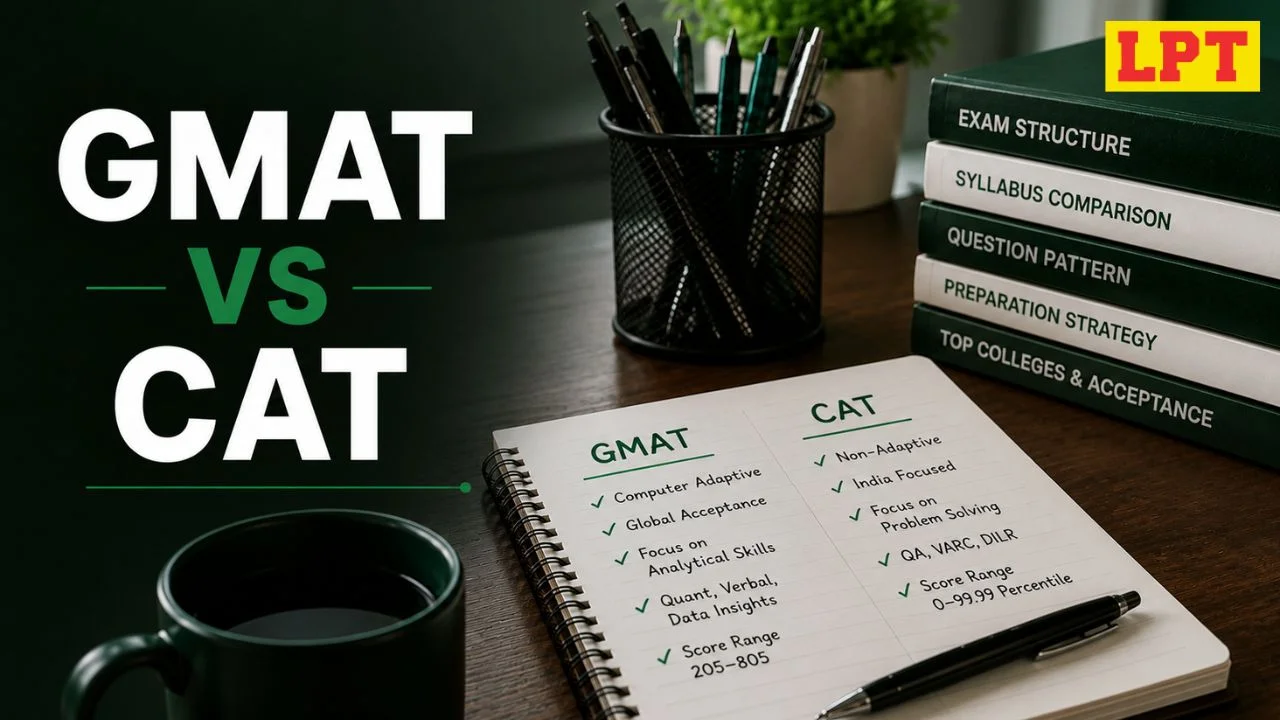
Read about GMAT vs CAT and know which is better for you.
GMAT Exam 2026: Highlights
The table below provides the key details of the GMAT exam at a glance:
| Particular | Details |
|---|---|
| Exam Name | Graduate Management Admission Test (GMAT) |
| Conducting Body | Graduate Management Admission Council (GMAC) |
| Exam Mode | Test Centre and Online |
| Exam Availability | Throughout the year |
| Score Validity | 5 years |
| Eligibility | 18+ years; no upper age limit |
| Exam Fee | US$275 (Test Centre), US$300 (Online) |
| Attempts Allowed | 5 attempts in a rolling 12-month period |
| Official Website | mba.com |
GMAT Exam Date 2026
The GMAT exam is conducted throughout the year, so there are no fixed exam dates.
Candidates can choose their preferred test date and time based on slot availability.
GMAT test centre exams are usually available Monday to Saturday, though schedules may vary by location. Online GMAT exams can be taken 24×7 with multiple daily time slots.
Candidates can book their exam up to 6 months in advance or as late as 24 hours before the test, subject to seat availability. Further, candidates can take the GMAT up to 5 times within a rolling 12-month period, with a minimum gap of 16 days between attempts.
GMAT Eligibility Criteria 2026
Candidates must be 18 years or older. There is no upper age limit, no minimum educational qualification, and no work experience required. Final-year students are also eligible to take the exam. Candidates can take a maximum 8 attempts in a lifetime, 5 attempts in a rolling 12-month period.
The table below explains the GMAT eligibility criteria:
| Eligibility Aspect | Requirement |
|---|---|
| Minimum Age | 18 years (13–17 years with parent/guardian NOC required) |
| Upper Age Limit | No upper age limit |
| Educational Qualification | No minimum qualification or percentage requirement |
| Final-Year Students | Eligible to take the GMAT |
| Work Experience | Not mandatory |
| Valid ID Proof | Passport is mandatory at GMAT test centres in India |
| Attempts Allowed | Up to 5 attempts in a rolling 12-month period |
| Gap Between Attempts | Minimum 16 days |
| Perfect Score Retake | Candidates scoring 805 must wait 5 years before retaking the exam |
| Testing Accommodations | Available for eligible candidates with disabilities |
GMAT Registration 2026
GMAT registration is open year-round, and the entire application process is completed online. Candidates must have a valid passport for registration and identity verification. Registering early helps you secure your preferred test date and leaves enough time for a retake if required. GMAT scores remain valid for 5 years, and you can reschedule your exam by paying the applicable fee.
Process to Register for GMAT 2026
For GMAT registration, candidates must create an account and enter their personal and academic details. Later, they must choose the exam mode, select a test date, and pay the registration fee.
| Step | Action |
|---|---|
| Create an Account | Visit the official GMAT website (mba.com) and sign up using your email address. |
| Fill in Personal Details | Enter your name, date of birth, contact details, and citizenship exactly as per your passport. |
| Complete Your Profile | Add your educational background, GPA, work experience, and study preferences. |
| Choose Exam Mode | Select either the test centre or online GMAT option. |
| Select Test Centre & Date | Pick your preferred test centre, exam date, and time slot. |
| Upload Required Details | Review all information and complete any required profile details. |
| Pay the Registration Fee | Make the payment using an accepted online payment method and confirm your booking. |
When Should You Register for the GMAT Exam?
Although the GMAT is conducted throughout the year, the right time to register for the exam is at least two to three months before the intended MBA application deadline. Early registration provides better access to preferred test centres and time slots, especially during peak B-School admission seasons. It also leaves enough time to retake the exam if the initial score does not meet the target business school's requirements.
Get a well-designed GMAT preparation strategy here.
Accepted GMAT ID Requirements
Candidates must carry a valid international passport to appear for the GMAT exam 2026. The passport must be valid and match the details entered during GMAT registration. Aadhaar Card is not accepted.
| Requirement | Details |
|---|---|
| Accepted ID | Valid international passport (for both test-centre and online exams). |
| Passport Validity | Expired passports and renewal papers are not accepted. |
| Name on Passport | Must exactly match the name on your GMAT account. |
| Date of Birth | Must match the date entered during registration. |
| Photograph | The passport must contain a recent, recognisable photograph. |
| Signature | The passport must include your signature. |
| Aadhaar Card | Not accepted. |
Unacceptable Documents for GMAT
The list below includes IDs that cannot be used, such as expired passports, credit cards, employee IDs, student IDs, etc.
- Expired passport
- Passport card
- Social Security card
- Draft classification card
- Credit card
- Employee or student ID
- University or college letter
- IDs with physical descriptions instead of photographs
- Photocopies of documents
- Profile photos, selfies, or portraits
- Any ID that does not meet GMAT identification requirements
GMAT Exam Fees (For Indian Candidates)
The GMAT exam fee is US$275 for the test centre and US$300 for the online exam. Candidates who want to send additional score reports must pay US$35 per report, regardless of the exam mode.
| Service | Test Center | Online |
|---|---|---|
| GMAT Exam Fee | US$275 | US$300 |
| Additional Score Report | US$35 per report | US$35 per report |
GMAT Rescheduling Fees
The rescheduling fee depends on how early you request it. It starts at US$55 for test centre exams and US$60 for online exams. The fee increases as the exam date gets closer.
| Reschedule Timeline | Test Center | Online |
|---|---|---|
| More than 60 days before the exam | US$55 | US$60 |
| 15–60 days before the exam | US$110 | US$120 |
| 14 days or less before the exam | US$165 | US$180 |
GMAT Cancellation Refund
Candidates who cancel their GMAT exam may receive a partial refund. The refund amount depends on the cancellation date. Those who cancel more than 60 days before the exam receive the highest refund. No cancellation or rescheduling is allowed within 24 hours of the scheduled exam, and the exam fee will be forfeited.
| Cancellation Timeline | Test Centre Refund | Online Refund |
|---|---|---|
| More than 60 days before the exam | US$110 | US$120 |
| 15–60 days before the exam | US$80 | US$90 |
| 14 days or less before the exam | US$55 | US$60 |
Read in detail about GMAT Online vs In-Person.
GMAT Exam Pattern 2026
The GMAT exam consists of 64 questions divided into 3 sections. Candidates get 2 hours 15 minutes to complete the exam, with an optional 10-minute break.
| Section | Questions | Duration |
|---|---|---|
| Verbal Reasoning | 23 | 45 minutes |
| Data Insights | 20 | 45 minutes |
| Quantitative Reasoning | 21 | 45 minutes |
| Total | 64 | 2 hours 15 minutes + 10-minute break (optional) |
Note: GMAT penalises for unanswered questions at the end of any section.
GMAT Syllabus 2026
The GMAT syllabus includes sections: Quantitative Reasoning, Verbal Reasoning, and Data Insights.
GMAT Exam Syllabus 2026: Section-wise Topics
The exam includes 21 Quantitative Reasoning, 23 Verbal Reasoning, and 20 Data Insights questions.
| GMAT Section | Question Type/Components | Skills Assessed |
|---|---|---|
| Quantitative Reasoning | 21 Problem Solving questions | Arithmetic, elementary algebra, logical thinking, and analytical problem-solving |
| Verbal Reasoning | Reading Comprehension, Critical Reasoning (23 questions) | Reading comprehension, argument evaluation, logical reasoning, inference, and language skills |
| Data Insights | Data Sufficiency, Multi-Source Reasoning, Table Analysis, Graphics Interpretation, Two-Part Analysis (20 questions) | Data interpretation, business decision-making, quantitative analysis, verbal reasoning, and critical thinking |
GMAT Focus Edition Syllabus 2026: Section-wise Topic Breakdown
The table below outlines the key topics covered in each section of the GMAT. It includes arithmetic, algebra, reading comprehension, critical reasoning, data sufficiency, table analysis, etc.
| Section | Topics Covered |
|---|---|
| Quantitative Reasoning | Arithmetic, elementary algebra, mathematical reasoning, and problem-solving. |
| Verbal Reasoning | Reading comprehension, critical reasoning, argument analysis, inference, and logical evaluation. |
| Data Insights | Data sufficiency, multi-source reasoning, table analysis, graphics interpretation, two-part analysis, and data literacy. |
Know in detail about GMAT syllabus section-wise.
| GMAT Verbal Syllabus | GMAT Quant Syllabus |
GMAT Scoring System 2026
The GMAT total score is calculated using performance in Quantitative Reasoning, Verbal Reasoning, and Data Insights. All 3 sections carry equal weight. The total score ranges from 205 to 805, while each section is scored on a 60–90 scale.
GMAT Score Breakdown
The GMAT score breakdown shows the scoring range for the total score and each section. The total score increases in 10-point intervals, while section scores increase in 1-point intervals.
| Score Type | Score Range | Score Interval | Standard Error of Measurement |
|---|---|---|---|
| Total Score | 205–805 | 10 points | 30–40 points |
| Quantitative Reasoning | 60–90 | 1 point | 3 points |
| Verbal Reasoning | |||
| Data Insights |
Important Points to Remember:
- Unofficial score appears immediately after the exam.
- The official score report is available through your mba.com account.
- Leaving questions unanswered lowers the final score.
GMAT Superscore
GMAC plans to introduce the GMAT Superscore in early August 2026, which combines your highest section scores from multiple GMAT attempts into one overall score. The superscore aims to highlight your best performance across different test attempts. It will appear as an additional score on the official score report. It will help candidates present their strongest scores while reducing the pressure of a single exam attempt.
GMAT Test Centres at University Campuses in India
GMAC launched its first On-Campus Test Centre in August 2014 at VIT University, Vellore. Since then, it has expanded the initiative to more universities. The first North East campus test centre was established at Don Bosco University, Assam. Today, on-campus GMAT test centres are available in Manipal, Tiruchirappalli, Guwahati, Vellore, Gurugram, Bhubaneswar, and Patiala.
GMAT Test Centres in India
The GMAT test centres in India 2026 are available across 14 states. Candidates can choose from major cities such as New Delhi, Mumbai, Bengaluru, Hyderabad, Chennai, Kolkata, etc.
| State/UT | City |
|---|---|
| Delhi | New Delhi |
| Maharashtra | Mumbai, Pune, Nagpur |
| Karnataka | Bengaluru, Mysore, Manipal |
| Tamil Nadu | Chennai, Vellore, Tiruchirappalli |
| Telangana | Hyderabad |
| West Bengal | Kolkata |
| Gujarat | Ahmedabad, Surat, Vadodara |
| Uttar Pradesh | Noida, Lucknow |
| Punjab | Patiala, Ludhiana, Jalandhar, Amritsar |
| Rajasthan | Jaipur, Pilani |
| Andhra Pradesh | Vijayawada, Visakhapatnam |
| Madhya Pradesh | Bhopal, Indore |
| Jharkhand | Ranchi |
| Chhattisgarh | Raipur |
Top MBA Colleges Accepting GMAT Scores in India
The table below lists the top MBA colleges accepting GMAT scores in India. It includes IIM Ahmedabad, IIM Bangalore, XLRI, MDI Gurgaon, IMT Ghaziabad, IMI New Delhi, etc.
| College | MBA Programs |
|---|---|
| Indian Institute of Management (IIM) Ahmedabad | MBA |
| Indian Institute of Management Bangalore (IIMB) | MBA |
| Indian Institute of Management (IIM) Calcutta | MBA |
| Indian Institute of Management (IIM) Lucknow | Blended Master of Business Administration (bMBA) |
| Indian Institute of Management (IIM) Kozhikode | Executive MBA / PGP |
| Indian Institute of Management (IIM) Indore | MBA / Executive PGP |
| Indian Institute of Management (IIM) Udaipur | MBA / Global Supply Chain Management / Executive MBA |
| Indian Institute of Management (IIM) Tiruchirappalli | PGPM (MBA for Working Executives) |
| Indian Institute of Management (IIM) Rohtak | PGPx / Doctoral Programme in Management (DPM) |
| Indian School of Business (ISB), Hyderabad | PGP, AMPBA |
| Xavier School of Management (XLRI), Jamshedpur | PGDM (Business Management, Human Resource Management) |
| Management Development Institute Gurgaon (MDI Gurgaon) | PGDM |
| SP Jain Institute of Management & Research (SPJIMR), Mumbai | PGDM (2-Year Programme) |
| Institute of Management Technology (IMT), Ghaziabad | PGDM, PGDM ExP |
| TA Pai Management Institute (TAPMI), Manipal | MBA |
| MICA, Ahmedabad | PGDM-C & PGDM |
| Xavier Institute of Management (XIM University), Bhubaneswar | MBA (Business Management) |
| Great Lakes Institute of Management, Chennai | 2-Year PGDM |
| International Management Institute (IMI), New Delhi | PGDM |
| FORE School of Management, New Delhi | PGDM |
Know everything about GMAT Cutoff.
GMAT Test Centre vs Online Exam 2026
The GMAT exam 2026 is available in test centre and online modes. Both follow the same 64-question format and a 2-hour 15-minute duration.
The table below compares the exam fee, availability, score reporting, and other key features of both options:
| Feature | Test Centre | Online |
|---|---|---|
| Availability | 7 days a week (centre hours) | 24×7, 7 days a week |
| Duration | 2 hours 15 minutes | 2 hours 15 minutes |
| Exam Pattern | 64 questions, 3 sections | 64 questions, 3 sections |
| Score Range | 205–805 | 205–805 |
| Exam Fee | US$250–US$275 | US$275–US$310 |
| Review & Edit | Change up to 3 answers per section | Change up to 3 answers per section |
| Scratch Work | 5 laminated sheets + 2 markers | Physical + online whiteboard |
| Reschedule | Available (terms apply) | Available (terms apply) |
| Accommodations | Additional time and accessibility support | Additional time and accessibility support |
| Unofficial Score | Displayed immediately | Displayed immediately |
| Official Score | Usually 1–3 days (up to 20 days) | Usually 1–3 days (up to 20 days) |
| Score Validity | 5 years | 5 years |
| Attempt Limit | 5 attempts in 12 months | 5 attempts in 12 months |
| Free Score Reports | 5 reports within 48 hours | 5 reports within 48 hours |
GMAT 2026 Books (Official Resources)
The table below lists official GMAT study materials for exam preparation. It includes the GMAT Official Guide 2026–2027, review books, Practice Exams 3–6, and the Premium Study Collection Bundle.
| Books for GMAT Preparation | |
|---|---|
| GMAT Official Guide 2026–2027: eBook & Online Question Bank | GMAT Official Guide Quantitative Review 2026–2027: eBook & Online Question Bank |
| GMAT Official Guide Verbal Review 2026–2027: eBook & Online Question Bank | GMAT Official Guide Data Insights Review 2026–2027: eBook & Online Question Bank |
| GMAT Official Practice Exams 3–6 | GMAT Official Practice Exams 3 & 4 |
| GMAT Official Practice Exams 5 & 6 | Premium GMAT Study Collection 2026–2027 Bundle |
| GMAT Official Practice Questions – Verbal | GMAT Official Practice Questions – Data Insights |
| GMAT Official Starter Kit | GMAT Official Practice Questions Bundle |
GMAT Preparation Tips
The right GMAT preparation tips help you improve your score and manage time better. Start your preparation early and follow a study plan. Cover all 3 sections, use official GMAT study materials, solve mock tests, and revise regularly.
- Create a study plan and start your preparation early.
- Understand the exam pattern and syllabus, which includes 3 sections and a total of 64 questions.
- Choose reliable GMAT study materials and mock tests, such as the GMAT Official Guide 2026–2027, section-wise review books, etc.
- Identify your weak areas and focus on improving them.
- Track your time while solving practice questions.
- Avoid spending too much time on a single question.
- Use the elimination method for difficult MCQs.
- Improve your ability to read graphs, charts, and tables.
- Practice mental calculations to save time in the Quant section.
- Solve advanced-level questions after mastering the basics.
Resource related to MBA:
| MBA Fee Structure | Top MBA Exams in India |
| MBA in Pharmaceutical Management |