 Talk to a Counsellor
IPM/BBA:
Talk to a Counsellor
IPM/BBA:  Support
Surrender at Dacca: Birth of a Nation: Summary & Full Analysis
Last Updated on 24 Jun 2026

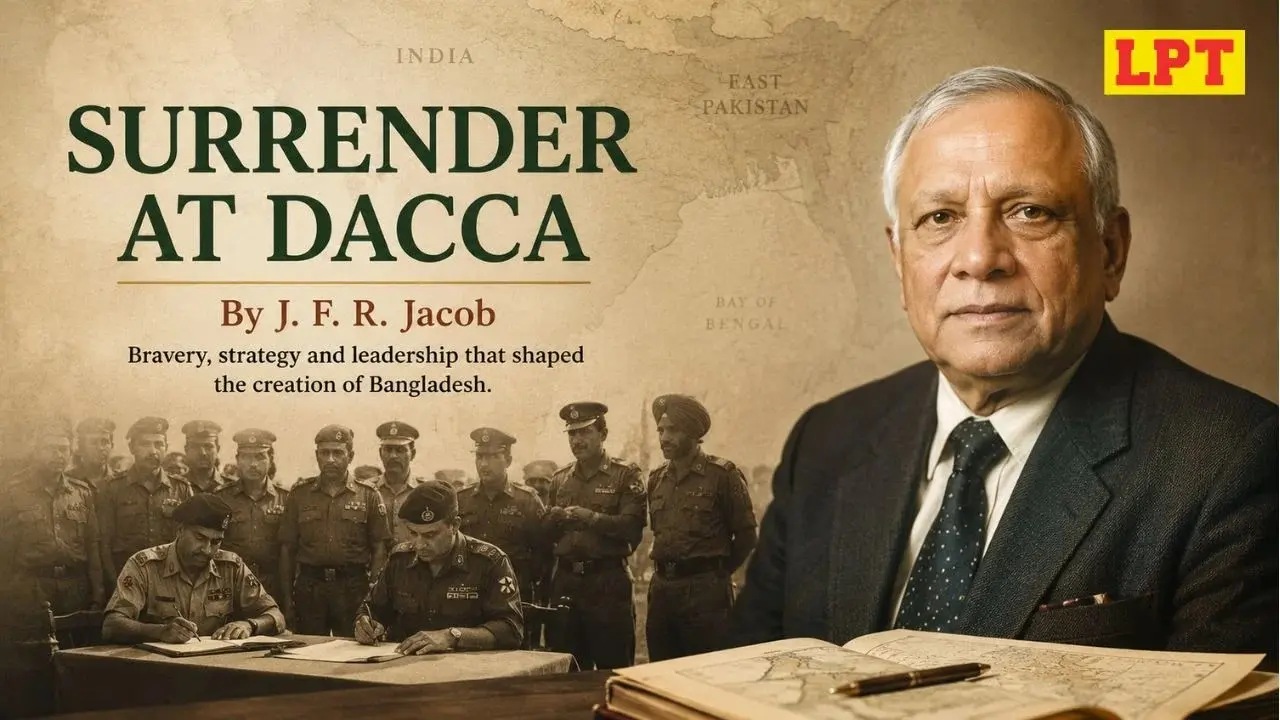
Surrender at Dacca by Lt Gen JFR Jacob is an important military and historical book that explains the events of the 1971 India-Pakistan War and the creation of Bangladesh. Written by J. F. R. Jacob, the book gives a first-hand account of military planning, political strategy, leadership decisions, and the historic surrender of Pakistani forces in Dhaka.
Major personalities such as General Sam Manekshaw, Lt Gen A.A.K. Niazi, Sheikh Mujibur Rahman, and the Indian Armed Forces play important roles in the narrative. The book explores themes like leadership, patriotism, military strategy, diplomacy, sacrifice, and humanitarian responsibility during war. Its central idea is that effective leadership, careful planning, and courage can change the course of history.
Below, we have covered the complete summary of Surrender at Dacca by Lt Gen JFR Jacob, historical background, important personalities, themes, military concepts, and more.
Table Of Contents
- CLAT PG: All About CLAT Postgraduate Exam for LLM
Surrender at Dacca: Birth of a Nation – Key Details
| Particular | Details |
|---|---|
| Book Name | Surrender at Dacca: Birth of a Nation |
| Author | JFR Jacob |
| Genre | Military History, Non-Fiction |
| Subject | 1971 India-Pakistan War and Bangladesh Liberation |
| Main Focus | Military strategy and surrender at Dhaka |
| Central Idea | Courage and planning can shape history |
| Writing Style | Factual, analytical, and experience-based |
| Famous For | First-hand account of the 1971 war |
| Academic Importance | Useful for understanding South Asian military history |
| Language Style | Clear, direct, and informative |
| Key Learning | Leadership and strategy are crucial during conflict |
Surrender at Dacca Summary
Below is the summary of Surrender at Dacca: Birth of a Nation book:
Beginning
Surrender at Dacca begins by explaining the political and humanitarian crisis that developed in East Pakistan before the 1971 India-Pakistan War. J. F. R. Jacob describes how tensions increased after the Pakistani military launched brutal operations against the Bengali population following political unrest and demands for autonomy. Millions of refugees crossed into India, creating economic, social, and humanitarian pressure on the Indian government.
The book explains how India initially tried diplomatic efforts while also preparing militarily for a possible conflict. Lt Gen Jacob highlights the importance of strategic planning, coordination among military commanders, and understanding the political situation before entering war. The early chapters also introduce important personalities such as General Sam Manekshaw, Sheikh Mujibur Rahman, and Pakistani military leaders.
The beginning establishes the background of the Bangladesh Liberation movement and India’s growing involvement in supporting the Mukti Bahini resistance forces.
Middle
In the middle section, the book focuses on the military operations carried out by the Indian Armed Forces during the 1971 war. Lt Gen Jacob explains how India planned rapid and coordinated attacks across East Pakistan instead of fighting long defensive battles. The strategy aimed at quickly reaching Dhaka, the political and military center of East Pakistan.
The narrative discusses the cooperation between the Indian Army, Air Force, Navy, and Mukti Bahini fighters. Jacob describes the logistical challenges, battlefield decisions, and tactical planning that helped Indian forces advance rapidly despite difficult terrain and wartime uncertainty.
One of the most important parts of the book is the discussion of the surrender negotiations in Dhaka. Lt Gen Jacob personally met A. A. K. Niazi and persuaded him to accept unconditional surrender. The book explains how psychological pressure, military positioning, and diplomatic understanding played a major role in achieving victory without unnecessary destruction and civilian casualties.
The middle section highlights leadership, decision-making under pressure, and the importance of military strategy in modern warfare.
Ending
In the final section, Surrender at Dacca describes the historic surrender of Pakistani forces in Dhaka on 16 December 1971, which led to the creation of Bangladesh as an independent nation. The surrender became one of the largest military surrenders after World War II and marked a major moment in South Asian history.
Lt Gen Jacob reflects on the political and military consequences of the war while emphasizing the role of courage, preparation, coordination, and leadership in achieving success. He also discusses how military victories depend not only on battlefield strength but also on diplomacy, planning, intelligence, and understanding human psychology.
The book concludes by highlighting the sacrifices of soldiers and the humanitarian importance of ending violence in East Pakistan. Through detailed military analysis and personal experiences, Surrender at Dacca presents the 1971 war as a defining moment that changed the political map of South Asia and demonstrated the importance of leadership and strategic thinking during crises.
Short Summary of Surrender at Dacca: Birth of a Nation
Surrender at Dacca is a first-hand military and historical account of the 1971 India-Pakistan War written by J. F. R. Jacob. The book explains the political crisis in East Pakistan, the refugee problem faced by India, and the military strategy that led to the creation of Bangladesh. Lt. Gen. Jacob describes how the Indian Armed Forces and Mukti Bahini fighters worked together to defeat Pakistani forces rapidly.
The narrative also focuses on leadership, military planning, diplomacy, and the historic surrender of Pakistani troops in Dhaka on 16 December 1971. Important personalities such as General Sam Manekshaw, Lt Gen A.A.K. Niazi, and Sheikh Mujibur Rahman play key roles in the events discussed. The central message of the book is that courage, strategic planning, leadership, and coordination can change history and resolve major humanitarian and political crises.
Read Short Story Summaries
Read concise and student-friendly summaries of famous short stories along with themes, moral lessons, literary devices, and important questions:
| A Cup of Tea by Katherine Mansfield | Upper Division Love by Manohar Malgonkar |
| The Night The Ghost In by James Thurber | Dr. Heideggers Experiment by Nathaniel Hawthorn |
Surrender at Dacca PDF
Download the summary PDF of Surrender at Dacca:
Download PDFImportant Personalities in Surrender at Dacca
Lt Gen J.F.R. Jacob
J. F. R. Jacob is the central personality of the book. He was intelligent, strategic, disciplined, and calm under pressure. As Chief of Staff of the Eastern Command, he played a major role in planning military operations and negotiating the surrender at Dhaka. He symbolizes leadership and strategic thinking.
General Sam Manekshaw
Sam Manekshaw was the Chief of the Indian Army during the 1971 war. Known for confidence, leadership, and military wisdom, he guided India’s war strategy effectively. He symbolizes courage, professionalism, and decisive military leadership.
Lt Gen A.A.K. Niazi
A. A. K. Niazi commanded Pakistani forces in East Pakistan during the war. He eventually signed the surrender agreement in Dhaka. His role symbolizes military defeat, political pressure, and the collapse of Pakistani control in East Pakistan.
Sheikh Mujibur Rahman
Sheikh Mujibur Rahman was the leader of the Bengali independence movement and later became the founding leader of Bangladesh. He symbolizes freedom, nationalism, and the struggle for political and cultural identity.
Indian Armed Forces
Indian Armed Forces played a decisive role in the 1971 war through coordinated military operations. They symbolize discipline, sacrifice, teamwork, and national service.
Mukti Bahini
Mukti Bahini was the Bengali resistance force that fought against Pakistani rule with Indian support. The group symbolizes patriotism, liberation, and resistance against oppression.
About the Author JFR Jacob
J. F. R. Jacob was a senior officer of the Indian Army and one of the key military leaders during the 1971 India-Pakistan War. He served as the Chief of Staff of the Eastern Command and played a major role in planning and executing the military strategy that led to the surrender of Pakistani forces in Dhaka and the creation of Bangladesh.
Lt Gen Jacob was respected for his strategic thinking, leadership abilities, and negotiation skills during wartime. Apart from his military achievements, he was also known for his writings and analysis on defence and national security issues.
Read Essay Summaries
Explore student-summaries of famous essays with detailed themes, moral lessons, literary devices, analysis, and important exam-focused questions.
| El Dorado by RL Stevenson | The Convalescent by Charles Lamb |
| The Golden Age by AG Gardiner | Tight Corners By EV Lucas |
Themes in Surrender at Dacca
- Leadership and Courage: The book highlights how strong leadership, confidence, and courage played a major role in achieving military and political success during the 1971 war.
- Military Strategy: A major theme is the importance of planning, coordination, intelligence, and tactical decision-making in warfare and crisis management.
- Patriotism and National Duty: The narrative emphasizes dedication, sacrifice, and commitment shown by soldiers and leaders in protecting national interests.
- Humanitarian Crisis: The refugee crisis and violence in East Pakistan highlight the human suffering caused by political conflict and war.
- National Liberation: The book explores the struggle for freedom and independence that eventually led to the creation of Bangladesh.
- Diplomacy and Negotiation: The importance of negotiation, communication, and psychological strategy is reflected in the surrender discussions at Dhaka.
- Sacrifice and Discipline: The role of discipline, teamwork, and sacrifice by military personnel is highlighted throughout the narrative.
- Political and Military Decision-Making: The book examines how political goals and military operations worked together during the Bangladesh Liberation War.
Central Idea of Surrender at Dacca Book
The central idea of Surrender at Dacca is that leadership, strategic planning, courage, and coordination can shape the course of history during times of crisis. Through his first-hand account of the 1971 India-Pakistan War, J. F. R. Jacob explains how military strategy, diplomacy, and determination led to the surrender of Pakistani forces and the creation of Bangladesh. The book also highlights the humanitarian importance of ending oppression and protecting people during political conflict and war.
Read Novel Summaries
Expand your reading with these popular novel summaries helpful for students, competitive exam aspirants, and curious readers:
| Wings of Fire by APJ Abdul Kalam | Leaders Eat Last by Simon Sinek |
| Story of My Experiments With Truth by Gandhi | My Days: A Memoir by RK Narayan |
Famous Quotes From Surrender at Dacca: Birth of a Nation
Wars are won by strategy, leadership, and morale.
Victory is not achieved by force alone.
Leadership demands calmness under pressure.
The objective was to end suffering quickly.
Military success depends on coordination.
Courage alone is not enough without preparation.
Negotiation can achieve what prolonged war cannot.
Lessons From Surrender at Dacca
- Leadership Matters During Crises: Strong leadership, confidence, and calm decision-making can change the outcome of difficult situations.
- Preparation Creates Success: Victory depends on planning, discipline, coordination, and strategic thinking rather than strength alone.
- Teamwork Achieves Great Goals: The cooperation between military forces and allied groups played a major role in the success of the mission.
- Humanitarian Concerns Are Important: The book highlights the importance of protecting civilians and ending suffering during political conflict and war.
- Courage and Responsibility Shape History: Bravery combined with responsibility and intelligent action can influence nations and historical events.
Top Vocabulary Words From Surrender at Dacca
| Word | Meaning |
|---|---|
| Diplomacy | Management of international relations |
| Strategy | Planned method to achieve a goal |
| Battalion | Large military unit |
| Ceasefire | Temporary stop in fighting |
| Liberation | Act of gaining freedom |
| Negotiation | Discussion to reach agreement |
| Humanitarian | Related to human welfare and relief |
| Command | Authority over military forces |
| Tactical | Related to planned military actions |
| Surrender | Giving up resistance to an enemy |
Read More Such Summaries
Explore Other Exam Preparation Resources
Prepare smarter with our dedicated coaching programs, preparation guides, mock tests, and study resources for top competitive exams in India.
FAQs On Surrender at Dacca by Lt Gen JFR Jacob

Nidhi Priya
Nidhi Priya has over 6 years of experience in EdTech content and SEO. She specializes in content strategy, organic growth, and mentoring editorial teams, with previous experience at iQuanta, CollegeDekho, and Careers360.