 Talk to a Counsellor
IPM/BBA:
Talk to a Counsellor
IPM/BBA:  Support
Letters to a Law Student by Nicholas McBride: Summary, PDF, Lessons
Last Updated on 25 Jun 2026

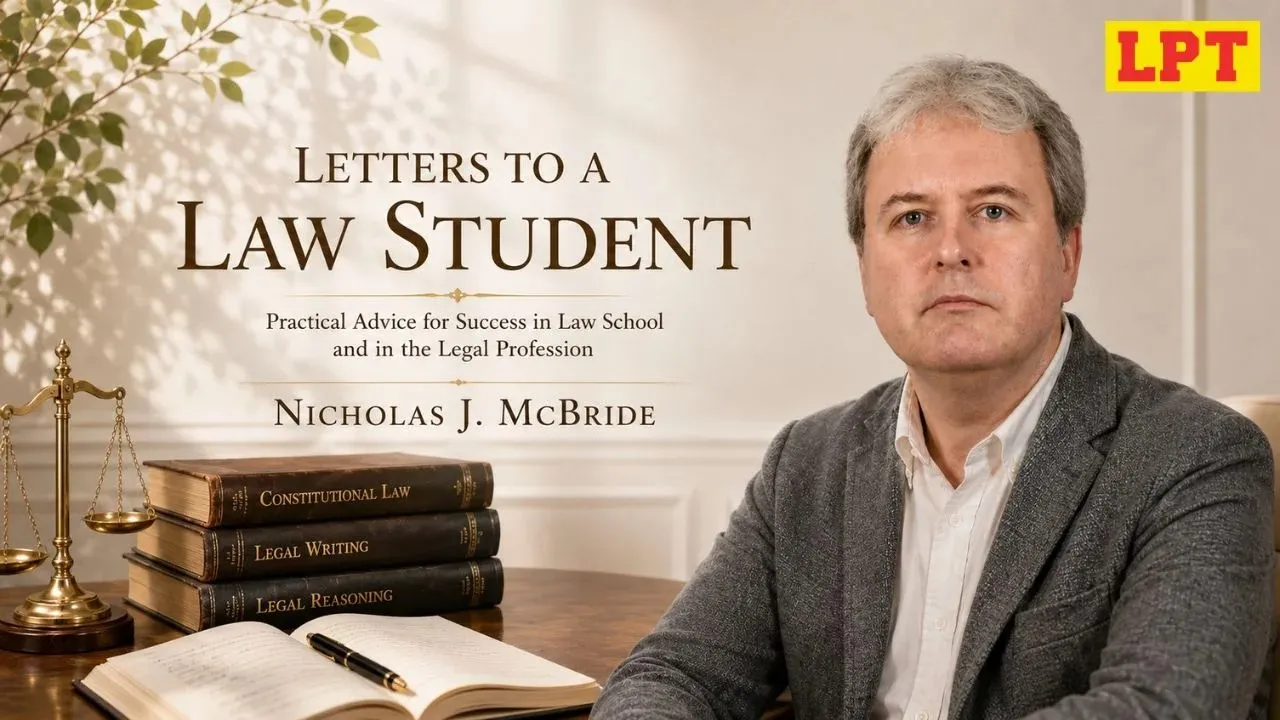
Letters to a Law Student by Nicholas J. McBride is a practical and student-friendly book that guides aspiring lawyers and law students through the realities of legal education, law school life, legal thinking, and professional growth. Written in the form of personal letters, the book explains important topics such as legal reasoning, case analysis, time management, legal ethics, internships, mooting, and exam preparation.
Nicholas J. McBride focuses on helping students understand how studying law is different from other subjects and why critical thinking and discipline are essential in legal education. The book explores themes like hard work, analytical thinking, responsibility, professional ethics, and continuous learning. Its central idea is that success in law depends not only on intelligence but also on preparation, consistency, and the ability to think independently.
Below, we have covered the complete summary of Letters to a Law Student book, key concepts, themes, lessons, legal terms, and more specially useful for law aspirants and students.
Table Of Contents
- CLAT PG: All About CLAT Postgraduate Exam for LLM
Letters to a Law Student: Key Highlights
| Particular | Details |
|
Book Name |
Letters to a Law Student |
|
Author |
Nicholas J. McBride |
|
Published Year |
2007 |
|
Genre |
Legal Education, Non-Fiction |
|
Subject |
Law school life and legal education |
|
Main Focus |
Legal reasoning, study methods, and professional growth |
|
Central Theme |
Success in law through discipline, thinking, and ethics |
|
Central Idea |
Law requires analytical thinking, preparation, and responsibility |
|
Academic Importance |
Helpful for understanding legal education and law school |
Explore The Complete Summaries of Novels, Stories & Essay Notes
Letters to a Law Student Summary
Here is the summary of Letters to a Law Student by Nicholas J McBride:
Beginning
Letters to a Law Student begins by introducing the challenges faced by students entering law school for the first time. Nicholas McBride explains that studying law is very different from studying most other subjects because it requires analytical thinking, interpretation, reasoning, and strong reading habits. Through personal and practical letters, the author guides students on how to adjust to the academic and intellectual demands of legal education.
The book initially focuses on common fears and misconceptions about law school. McBride reassures students that success in law does not depend only on intelligence but also on discipline, consistency, curiosity, and willingness to improve. He explains the importance of reading cases carefully, understanding legal principles, and learning how to think like a lawyer instead of memorizing information mechanically.
The opening chapters also discuss time management, classroom participation, note-making, and building confidence during the early stages of legal education.
Middle
In the middle section, the Letters to a Law Student book explores practical aspects of becoming a successful law student and future lawyer. McBride explains legal reasoning and critical thinking in a simple way, showing students how lawyers analyze facts, interpret cases, and build arguments. He emphasizes that law students should focus on understanding principles and logic rather than only remembering judgments.
The book also discusses important law school activities such as moot courts, internships, legal research, and essay writing. McBride highlights how these activities help students develop communication skills, advocacy, confidence, and practical understanding of law.
Another important topic covered is legal ethics and professional responsibility. The author explains that successful lawyers must combine knowledge with honesty, discipline, and respect for justice. He also advises students on handling stress, competition, exam pressure, and career uncertainty during law school.
Ending
In the final section, Letters to a Law Student focuses on long-term career development and personal growth in the legal profession. McBride encourages students to become independent thinkers who constantly question, analyze, and learn throughout their careers.
The book concludes by emphasizing that becoming a lawyer is not only about earning a degree but also about developing responsibility, ethics, confidence, and intellectual discipline. McBride reminds students that legal education is a continuous journey of learning and self-improvement.
The ending also highlights the importance of balancing ambition with integrity and professional ethics. Through practical advice and motivational guidance, Letters to a Law Student presents law school as both a challenging and rewarding experience that shapes students into responsible legal professionals capable of contributing positively to society and justice.
Short Summary of Letters to a Law Student
Letters to a Law Student is a practical guide for law students and aspiring lawyers written in the form of personal letters by Nicholas J. McBride. The book explains the realities of law school, legal reasoning, study habits, moot courts, internships, exam preparation, and professional ethics in a simple and motivating way. McBride emphasizes that success in law depends not only on intelligence but also on discipline, critical thinking, consistency, and curiosity.
The book also teaches students how to analyze cases, manage time, improve legal writing, and develop advocacy skills. Through practical advice and honest observations, the author helps students understand the challenges and opportunities of legal education. The central message of the book is that becoming a successful lawyer requires continuous learning, independent thinking, ethical responsibility, and dedication to justice and professional growth.
Letters to a Law Student PDF
Download free PDF of Letters to a Law Student by Nicholas McBride:
About the Author Nicholas J McBride
Nicholas J. McBride is a respected British legal scholar, academic, and author known for his contribution to legal education and student guidance. He has taught law at prestigious universities and is admired for simplifying difficult legal concepts for students and beginners. McBride’s teaching style focuses on practical understanding, critical thinking, and improving analytical skills rather than memorizing legal information.
Read Novel Summaries
Expand your reading with these popular novel summaries helpful for students, competitive exam aspirants, and curious readers:
| Wings of Fire by APJ Abdul Kalam | Leaders Eat Last by Simon Sinek |
| Story of My Experiments With Truth by Gandhi | My Days: A Memoir by RK Narayan |
Important Concepts in Letters to a Law Student by Nicholas J McBride
Law Student
The law student represents every beginner entering legal education with confusion, ambition, and curiosity. The student symbolizes growth, learning, intellectual development, and the challenges of adapting to legal studies.
Legal Reasoning
Legal reasoning is one of the most important concepts in the book. It refers to the ability to analyze facts, interpret laws, and build logical arguments. It symbolizes the foundation of successful legal thinking.
Moot Courts
Moot courts are discussed as practical exercises that improve advocacy, research, confidence, and courtroom presentation skills. They symbolize experiential learning and preparation for real legal practice.
Internships
Internships help students gain practical legal experience beyond classrooms. The book presents them as essential for understanding the legal profession and building professional skills.
Legal Ethics
Legal ethics refers to honesty, integrity, fairness, and professional responsibility in law. McBride highlights ethics as one of the most important qualities for becoming a respected lawyer.
Critical Thinking
Critical thinking means questioning, analyzing, and understanding legal principles deeply instead of memorizing information. It symbolizes intellectual independence and effective legal learning.
Professional Responsibility
Professional responsibility refers to the duties lawyers owe toward clients, courts, society, and justice. It symbolizes accountability and ethical legal practice.
Explore the Best Novels for IPMAT Preparation
Letters to a Law Student: Themes
- Legal Education: The book focuses on the realities of law school and explains how legal education develops analytical thinking, reasoning, and professional skills.
- Discipline and Hard Work: McBride repeatedly emphasizes that success in law depends on consistency, preparation, time management, and disciplined study habits.
- Critical Thinking: A major theme is the importance of questioning, analyzing, and understanding legal principles instead of memorizing information blindly.
- Professional Ethics: The book highlights honesty, integrity, fairness, and responsibility as essential qualities for successful lawyers and legal professionals.
- Independent Learning: Law students are encouraged to become self-motivated learners who continuously improve their knowledge and legal understanding.
- Practical Legal Skills: The importance of moot courts, internships, legal writing, and advocacy is discussed throughout the book.
- Personal Growth: The book explains how law school shapes confidence, communication, intellectual maturity, and professional identity.
- Responsibility of Lawyers: McBride emphasizes that lawyers have duties toward clients, courts, society, and justice beyond personal success.
Read Essay Summaries
Explore student-summaries of famous essays with detailed themes, moral lessons, literary devices, analysis, and important exam-focused questions.
| Of Youth and Age Essay by Francis Bacon | Of Friendship by Francis Bacon |
| The Golden Age by AG Gardiner | Tight Corners By EV Lucas |
Literary and Analytical Devices Used in Letters to a Law Student
| Device / Technique | Meaning | Example in the Book |
|
Letter-Based Narrative |
Presenting ideas through personal letters |
Advice written directly to students |
|
Conversational Tone |
Friendly and easy communication style |
Practical guidance for law students |
|
Analytical Reasoning |
Logical explanation of legal thinking |
Discussion of legal reasoning and cases |
|
Explanatory Style |
Simplifying difficult legal concepts |
Explanation of legal education methods |
|
Practical Illustration |
Using real-life law school situations |
Moot courts and internships discussion |
|
Motivational Tone |
Encouraging students positively |
Advice on handling stress and competition |
|
Reflective Discussion |
Encouraging self-analysis and growth |
Career and ethics-related advice |
|
Academic Tone |
Formal discussion of legal education |
Explanation of legal concepts |
|
Direct Address |
Speaking directly to readers |
“You” focused guidance for students |
|
Realistic Observation |
Honest discussion of law school challenges |
Exam pressure and workload |
Famous Quotes From Letters to a Law Student
Studying law is not about memorizing rules, but learning how to think.
A good lawyer is always a good reader.
Law rewards discipline more than brilliance.
Legal reasoning is a skill developed through practice.
Confidence comes from preparation.
A lawyer must learn to question everything.
Success in law school is a marathon, not a sprint.
Ethics matter as much as knowledge in law.
The best law students remain curious.
Law school teaches you how to think under pressure.
Read Short Story Summaries
Read concise and student-friendly summaries of famous short stories along with themes, moral lessons, literary devices, and important questions:
| A Cup of Tea by Katherine Mansfield | Upper Division Love by Manohar Malgonkar |
| The Night The Ghost In by James Thurber | Dr. Heideggers Experiment by Nathaniel Hawthorn |
Top Lessons From Letters to a Law Student
- Discipline Leads to Success: The book teaches that consistency, preparation, and hard work are more important than shortcuts in legal education.
- Critical Thinking Is Essential: Law students must learn to analyze, question, and reason logically instead of memorizing information blindly.
- Ethics Matter in Legal Practice: Honesty, integrity, and responsibility are essential qualities for becoming a respected legal professional.
- Continuous Learning Is Important: The legal profession requires constant reading, improvement, and intellectual curiosity throughout life.
- Confidence Comes Through Preparation: The book highlights that proper preparation reduces fear and improves performance in academics and professional life.
Top Vocabulary Words From Letters to a Law Student
| Word | Meaning |
|
Advocacy |
Professional practice of arguing legal cases |
|
Jurisdiction |
Legal authority of a court |
|
Precedent |
Earlier legal decision used as a guide |
|
Litigation |
Process of taking legal action |
|
Interpretation |
Explanation of legal meaning |
|
Jurisprudence |
Study or philosophy of law |
|
Ethics |
Moral principles and professional conduct |
|
Analytical |
Related to detailed logical examination |
|
Reasoning |
Process of thinking logically |
|
Discipline |
Controlled and organized behaviour |
Read More Such Summaries
Explore Other Exam Preparation Resources
Prepare smarter with our dedicated coaching programs, preparation guides, mock tests, and study resources for top competitive exams in India.
FAQs on Letters to a Law Student by Nicholas McBride

Virendra Soni
Virendra heads SEO & Content at LPT. A writer at heart, he focuses on building exam-focused content that informs, guides, and supports aspirants in their preparation journey.