 Talk to a Counsellor
IPM/BBA:
Talk to a Counsellor
IPM/BBA:  Support
Inside the Criminal Mind by S Samehow: Summary, Review, PDF
Last Updated on 24 Jun 2026

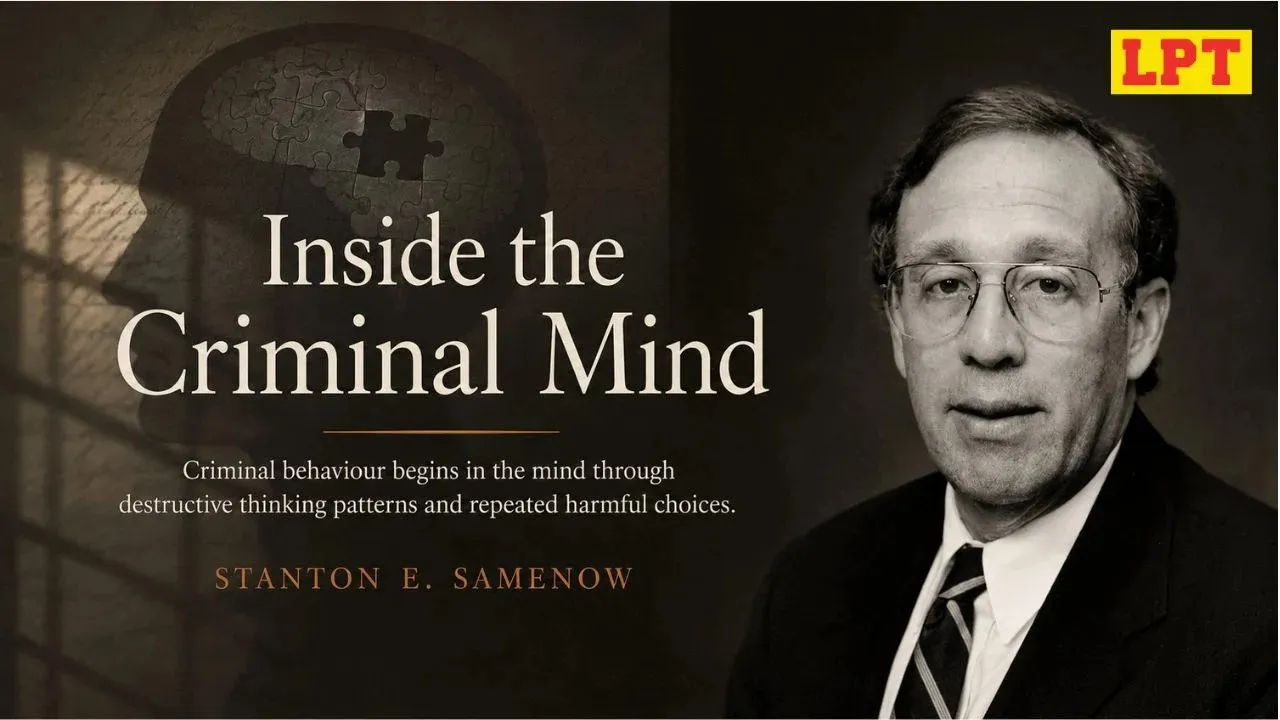
Inside the Criminal Mind by Stanton E Samenow is a psychological and criminological book that explores how criminals think, make decisions, justify their actions, and develop harmful behavioural patterns. Instead of blaming crime only on poverty, society, or environment, Stanton E. Samenow argues that criminal behaviour is strongly connected to personal choices, thinking habits, manipulation, irresponsibility, and refusal to accept accountability.
The Inside the Criminal Mind book examines themes like criminal psychology, behavioural patterns, deception, self-control, rehabilitation, and personal responsibility. Through real case studies and psychological analysis, Samenow explains how criminals rationalize harmful actions and avoid guilt. The central idea of the book is that criminal behaviour begins in the mind through distorted thinking patterns and that real change requires accountability and behavioural reform.
Below, we have covered the complete summary of Inside the Criminal Mind novel, important psychological concepts, themes, behavioural analysis, critical analysis, and more useful for psychology, criminology, law, and forensic studies students.
Table Of Contents
- CLAT PG: All About CLAT Postgraduate Exam for LLM
Inside the Criminal Mind – Key Details
| Particular | Details |
|---|---|
| Book Name | Inside the Criminal Mind |
| Author | Stanton E. Samenow |
| Published Year | 1984 |
| Genre | Psychology, Criminology, Non-Fiction |
| Central Theme | Crime originates from distorted thinking and choices |
| Central Idea | Accountability and behavioural change are necessary for reform |
| Writing Style | Analytical, research-based, and case-study oriented |
| Famous For | Psychological analysis of criminal behaviour |
| Academic Importance | Useful for understanding criminal psychology |
| Language Style | Clear, direct, and analytical |
| Key Learning | Criminal behaviour is connected to choices and thought patterns |
Explore The Complete Summaries of Novels, Stories & Essay Notes
Inside the Criminal Mind Summary
Below is the summary of Inside the Criminal Mind book by Stanton E. Samenow:
Beginning
Inside the Criminal Mind begins by challenging common beliefs about why people commit crimes. Stanton E. Samenow argues that criminal behaviour cannot be explained only through poverty, bad upbringing, social inequality, or environmental factors. Instead, he explains that crime is strongly connected to the way criminals think, make decisions, and justify their actions.
The book introduces the concept of the "criminal mind," which refers to distorted thinking patterns that encourage manipulation, irresponsibility, aggression, selfishness, and lack of guilt. Samenow explains that many criminals believe rules do not apply to them and often blame society, family, or circumstances for their actions instead of accepting responsibility.
The early chapters focus on understanding how criminal thinking develops gradually through repeated dishonest behaviour, impulsive decisions, and refusal to respect others' rights. The author also explains that criminals often appear normal outwardly while hiding destructive thought patterns internally.
Middle
In the middle section, the book deeply analyzes the behaviour and mindset of criminals through psychological observations and real-life case studies. Samenow explains that criminals usually manipulate people, lie frequently, seek control, and avoid accountability. Many offenders rationalize their crimes by convincing themselves that they are victims or that their actions are justified.
The book discusses how criminal behaviour is often connected to choices rather than uncontrollable social conditions. Samenow emphasizes that many criminals carefully plan actions and knowingly ignore moral and legal boundaries. He also explains that criminals often enjoy power, excitement, and dominance while lacking empathy for victims.
Another major discussion focuses on behavioural habits such as impulsiveness, irresponsibility, laziness, hostility, and inability to handle frustration positively. The author argues that these patterns are learned and reinforced over time if not corrected.
Samenow also criticizes rehabilitation systems that ignore personal accountability. He believes true reform begins only when offenders honestly accept responsibility for their behaviour instead of blaming external factors.
Ending
In the final section, Inside the Criminal Mind focuses on the possibility of behavioural change and rehabilitation. Samenow explains that criminals can change, but only when they recognize their harmful thinking patterns and willingly take responsibility for their actions.
The book concludes by emphasizing the importance of discipline, honesty, self-control, and accountability in preventing criminal behaviour. Samenow argues that society, law enforcement, psychologists, and rehabilitation systems must understand criminal thinking deeply to deal with crime effectively.
The ending also highlights that criminal behaviour is not simply the result of circumstances but often the product of repeated harmful choices and attitudes. Through psychological analysis and behavioural study, Inside the Criminal Mind presents crime as a problem connected to thinking patterns, decision-making, and personal responsibility while encouraging readers to understand the psychological roots of criminal actions more clearly.
Short Summary of Inside the Criminal Mind
Inside the Criminal Mind explores the psychology and thinking patterns behind criminal behaviour. Stanton E. Samenow argues that crime is not caused only by poverty, environment, or social conditions but also by personal choices, distorted thinking, irresponsibility, and lack of accountability. The book explains how criminals manipulate people, rationalize harmful actions, avoid guilt, and ignore rules and social responsibility.
Through psychological analysis and real-life case studies, Samenow discusses behavioural traits such as impulsiveness, aggression, selfishness, and deception. He also explains that rehabilitation becomes possible only when offenders honestly accept responsibility for their actions.
The central message of the book is that criminal behaviour begins in the mind through destructive thinking patterns and repeated harmful choices. The book is highly useful for psychology students, criminology learners, law students, forensic studies aspirants, and readers interested in understanding criminal psychology and human behaviour.
Read Short Story Summaries
Read concise and student-friendly summaries of famous short stories along with themes, moral lessons, literary devices, and important questions:
| A Cup of Tea by Katherine Mansfield | Upper Division Love by Manohar Malgonkar |
| The Night The Ghost In | Dr. Heideggers Experiment by Nathaniel Hawthorn |
Inside the Criminal Mind Summary PDF
Download the PDF of Inside the Criminal Mind summary:
Inside the Criminal Mind by Stanton Samehow: Themes
- Criminal Psychology: The book deeply explores how criminals think, behave, and justify harmful actions through distorted thought patterns and attitudes.
- Personal Responsibility: A major theme is that individuals must accept accountability for their actions instead of blaming society or circumstances.
- Manipulation and Deception: The book explains how criminals manipulate people, lie frequently, and rationalize their behaviour to avoid guilt and responsibility.
- Choice and Behaviour: Samenow argues that criminal behaviour develops through repeated harmful choices and behavioural habits over time.
- Accountability and Reform: The narrative highlights that genuine rehabilitation becomes possible only when offenders honestly accept responsibility for their conduct.
- Human Behaviour: The book studies behavioural patterns, impulses, aggression, selfishness, and decision-making processes among offenders.
- Ethics and Society: The relationship between morality, law, social order, and responsible behaviour is discussed throughout the book.
- Rehabilitation and Change: The book examines the possibility of behavioural reform through discipline, self-control, honesty, and personal effort.
Central Idea of Inside the Criminal Mind
The central idea of Inside the Criminal Mind is that criminal behaviour originates from distorted thinking patterns, harmful choices, and refusal to accept responsibility. Through psychological analysis and case studies, Stanton E. Samenow explains that crime cannot be understood only through social or economic conditions because personal accountability and behavioural habits also play a major role.
The book also highlights that true rehabilitation becomes possible only when offenders honestly recognize and change their destructive thinking patterns and actions.
Read Essay Summaries
Explore student-summaries of famous essays with detailed themes, moral lessons, literary devices, analysis, and important exam-focused questions.
| El Dorado by RL Stevenson | The Convalescent by Charles Lamb |
| The Golden Age by AG Gardiner | Tight Corners By EV Lucas |
Famous Quotes From Inside the Criminal Mind by Stanton Samehow
"Crime begins in the mind."
"Criminals see themselves as victims."
"The criminal chooses crime."
"Excuses protect the criminal mind."
"Manipulation is a way of life for many criminals."
"Responsibility is the first step toward change."
"Self-control separates responsible people from criminals."
"A criminal often believes rules are for others."
"Real reform requires honesty with oneself."
Lessons From Inside the Criminal Mind Book
- Choices Shape Behaviour: The book teaches that repeated decisions and thinking patterns strongly influence human behaviour and actions.
- Accountability Is Necessary for Change: Real personal growth and rehabilitation begin only when individuals accept responsibility honestly.
- Manipulation Harms Society: Dishonesty, deception, and blame-shifting damage relationships, trust, and social order.
- Self-Control Is Important: Discipline, patience, and emotional control help individuals avoid destructive and harmful behaviour.
- Understanding Psychology Helps Prevent Crime: Studying criminal thinking patterns can help society improve rehabilitation, prevention, and behavioural understanding.
Read Novel Summaries
Expand your reading with these popular novel summaries helpful for students, competitive exam aspirants, and curious readers:
| Letters to a Law Student by Nicholas McBride | Leaders Eat Last by Simon Sinek |
| Story of My Experiments With Truth by Gandhi | My Days: A Memoir by RK Narayan |
Top Vocabulary Words From Inside the Criminal Mind
| Word | Meaning |
|---|---|
| Criminology | Study of crime and criminal behaviour |
| Rationalization | Creating excuses to justify actions |
| Manipulation | Controlling or influencing others unfairly |
| Accountability | Responsibility for actions |
| Impulsiveness | Acting without thinking carefully |
| Rehabilitation | Process of behavioural reform |
| Aggression | Hostile or violent behaviour |
| Behavioural | Related to actions and conduct |
| Conditioning | Process of learning behavioural patterns |
| Psychological | Related to the human mind and behaviour |
About the Author Stanton E Samehow
Stanton E. Samenow is a well-known American psychologist and criminologist recognized for his work in criminal psychology and behavioural analysis. He spent many years studying offenders, conducting interviews, and analyzing criminal behaviour patterns to understand how criminals think and make decisions.
Samenow became widely known for challenging traditional theories that blamed crime mainly on poverty, environment, or social conditions. Instead, he argued that personal choices, thinking patterns, irresponsibility, and lack of accountability play a major role in criminal behaviour. His work focuses on understanding manipulation, rationalization, aggression, and behavioural habits among offenders.
Explore Our Other Summaries:
Explore Other Exam Preparation Resources
Prepare smarter with our dedicated coaching programs, preparation guides, mock tests, and study resources for top competitive exams in India.
FAQs On Inside the Criminal Mind by Stanton E Samenow

Nidhi Priya
Nidhi Priya has over 6 years of experience in EdTech content and SEO. She specializes in content strategy, organic growth, and mentoring editorial teams, with previous experience at iQuanta, CollegeDekho, and Careers360.