 Talk to a Counsellor
IPM/BBA:
Talk to a Counsellor
IPM/BBA:  Support
Of Youth and Age by Francis Bacon: Summary, Theme, QnA, PDF
Last Updated on 25 Jun 2026

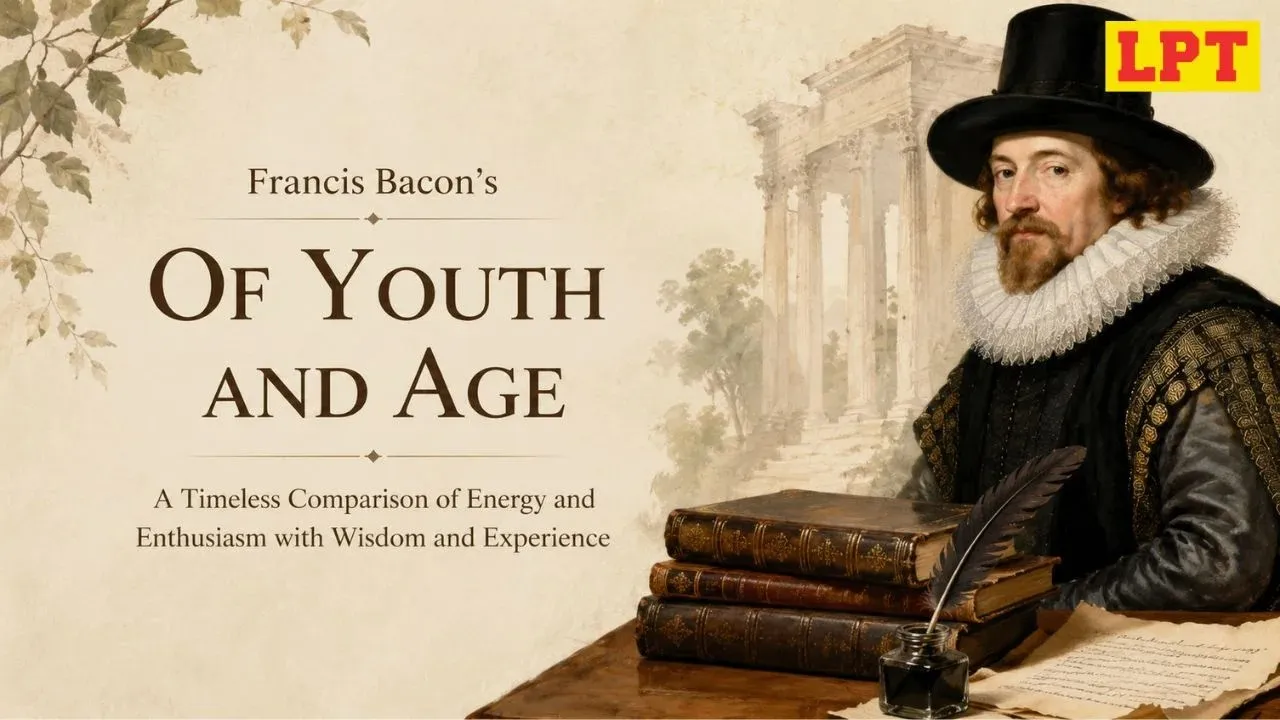
Of Youth and Age by Francis Bacon is a philosophical and analytical essay which compares the qualities, strengths, and weaknesses of youth and old age. Bacon explains that young people are energetic, imaginative, ambitious, and quick in action, while older people are wise, experienced, cautious, and better at judgment. The essay highlights how both stages of life have their own advantages and limitations. It mainly focuses on wisdom, maturity, passion, experience, decision-making, and human nature.
Below, we have covered the summary of Of Youth and Age by Francis Bacon, theme, literary devices, important questions with answers, and more.
Table Of Contents
- CLAT PG: All About CLAT Postgraduate Exam for LLM
Of Youth and Age by Francis Bacon: Summary
In Of Youth and Age essay, Francis Bacon compares the qualities, strengths, and weaknesses of young people and old people. He explains that both stages of life have their own advantages and limitations, and society functions best when the energy of youth combines with the wisdom of age.
Bacon describes youth as a stage filled with energy, imagination, ambition, confidence, and quick action. Young people are naturally enthusiastic and courageous, which allows them to attempt difficult tasks fearlessly. However, Bacon also points out that youth often lacks experience and judgment. Because of excessive confidence and emotional excitement, young people may act impulsively, make mistakes, or take unnecessary risks without thinking carefully about consequences.
In contrast, Bacon describes old age as a period of wisdom, maturity, caution, and practical understanding. Older people think carefully before acting because they possess experience gained through life. They are usually better at judgment, planning, and decision-making. However, Bacon also mentions certain weaknesses of old age. Older people may become overly cautious, slow in action, doubtful, or resistant to change and innovation.
Throughout the essay, Bacon explains that neither youth nor old age is perfect by itself. Young people contribute enthusiasm and boldness, while older people contribute wisdom and stability. He suggests that the best results are achieved when the strengths of both age groups work together.
Using logical comparison and practical observation, Bacon presents a balanced analysis of human nature and maturity. The essay highlights the importance of balancing passion with wisdom, energy with experience, and ambition with careful judgment in human life and society.
Explore The Complete Summaries of Novels, Stories & Essay Notes
Short Summary of Of Youth and Age Essay by Francis Bacon
In Of Youth and Age, Francis Bacon compares the qualities of young and old people. According to Bacon, youth is energetic, ambitious, imaginative, and fearless, but it often lacks experience and careful judgment. Old age, on the other hand, brings wisdom, maturity, caution, and practical understanding, though older people may become slow or overcareful. Bacon explains that both stages of life have strengths and weaknesses.
Young people contribute energy and boldness, while older people contribute wisdom and stability. The essay highlights the importance of balancing enthusiasm with experience for success in life and society.
Of Youth and Age by Francis Bacon PDF
Download free PDF of Of Youth and Age by Francis Bacon:
Of Youth and Age by Francis Bacon: Theme
- Youth vs Old Age: The main theme of the essay is the comparison between the strengths and weaknesses of youth and old age.
- Wisdom and Experience: Bacon highlights how experience gained with age improves judgment and decision-making abilities.
- Energy and Enthusiasm: The essay explores the passion, ambition, and boldness naturally found in young people.
- Caution and Maturity: Old age is associated with careful thinking, patience, and practical understanding.
- Human Nature: The essay studies how human behavior and thinking change at different stages of life.
- Balance in Life: Bacon suggests that success comes from balancing youthful enthusiasm with mature wisdom.
- Leadership and Decision-Making: The essay reflects on how age and experience influence leadership qualities and judgment.
Read Essay Summaries
Explore student-summaries of famous essays with detailed themes, moral lessons, literary devices, analysis, and important exam-focused questions.
| Of Friendship by Francis Bacon | The Convalescent by Charles Lamb |
| The Golden Age by AG Gardiner | Tight Corners By EV Lucas |
Literary Devices Used in Of Youth and Age Essay
| Literary Device | Example / Reference |
|
Aphorism |
Short wise statements about youth and age |
|
Contrast |
Youth compared with old age |
|
Parallelism |
Balanced comparison between both age groups |
|
Analogy |
Human qualities compared through examples |
|
Reflection |
Bacon’s observations on human nature |
|
Symbolism |
Youth and age representing life stages |
|
Repetition |
Repeated discussion of strengths and weaknesses |
|
Logical Argument |
Step-by-step comparison and reasoning |
|
Concise Style |
Short and direct sentences |
|
Antithesis |
Passion vs caution, energy vs wisdom |
Explore the Best Novels for IPMAT Preparation
Top Vocabulary Words Used in Of Youth and Age
| Word | Meaning |
|
Ambition |
Strong desire to achieve success |
|
Prudence |
Careful and wise judgment |
|
Impulsive |
Acting suddenly without thinking |
|
Maturity |
State of being mentally developed |
|
Enthusiasm |
Strong excitement and interest |
|
Experience |
Knowledge gained through life |
|
Caution |
Careful behavior to avoid danger |
|
Judgment |
Ability to make wise decisions |
|
Stability |
State of being steady and balanced |
|
Wisdom |
Deep understanding and good sense |
Moral Message of Of Youth and Age by Francis Bacon
The essay teaches that both youth and old age have valuable strengths and weaknesses. Francis Bacon explains that success comes from balancing youthful energy and ambition with the wisdom and experience of old age. Human life becomes more meaningful when passion and careful judgment work together.
Read Short Story Summaries
Read concise and student-friendly summaries of famous short stories along with themes, moral lessons, literary devices, and important questions:
| A Cup of Tea by Katherine Mansfield | Upper Division Love by Manohar Malgonkar |
| The Night The Ghost In by James Thurber | Dr. Heideggers Experiment by Nathaniel Hawthorn |
Of Youth and Age by Francis Bacon: Questions and Answers
What is the central idea of Of Youth and Age?
The central idea of Of Youth and Age is that both youth and old age possess unique strengths and weaknesses, and success in life comes from balancing the qualities of both stages. Francis Bacon explains that youth is energetic, ambitious, imaginative, and courageous, while old age is wise, experienced, cautious, and practical. Young people may act impulsively because of lack of experience, whereas older people may become overcareful or slow in action. Bacon suggests that society benefits when youthful enthusiasm combines with mature wisdom.
How does Bacon describe young people in the essay?
Bacon describes young people as energetic, ambitious, imaginative, passionate, and fearless. According to him, youth is naturally enthusiastic and willing to attempt difficult tasks without fear of failure. Young people are quick in action and full of creativity, which allows them to bring innovation and excitement into society. However, Bacon also points out their weaknesses. Because they lack experience and maturity, they may become impulsive, overconfident, emotional, or careless in decision-making. Young people often take unnecessary risks without fully understanding consequences.
What qualities of old age are discussed in the essay?
Francis Bacon explains that old age is associated with wisdom, maturity, patience, caution, and practical understanding. Older people possess valuable experience gained through life, which helps them make thoughtful and careful decisions. They usually avoid unnecessary risks and think deeply before acting. Bacon believes that older individuals are better at judgment and planning because they understand human nature and consequences more clearly. However, he also mentions weaknesses of old age, such as excessive caution, slowness, doubt, and resistance to change.
Why does Bacon believe youth and age should work together?
Bacon believes youth and age should work together because both possess qualities that complement each other. Youth contributes energy, ambition, courage, creativity, and quick action, while old age contributes wisdom, maturity, patience, and practical judgment. According to Bacon, neither stage is perfect alone. Young people may lack experience, while older people may become too cautious or slow. When youthful enthusiasm combines with mature wisdom, better decisions and stronger leadership become possible.
What are the weaknesses of youth according to Bacon?
According to Bacon, the main weaknesses of youth are impulsiveness, overconfidence, emotional excitement, and lack of experience. Young people often act quickly without thinking carefully about consequences. Their ambition and enthusiasm may sometimes lead them toward unnecessary risks or mistakes. Bacon explains that youth is naturally passionate and impatient, which can weaken judgment and stability. Although young people possess courage and creativity, they may struggle with discipline and careful planning.
What are the weaknesses of old age discussed in the essay?
Bacon explains that old age may become overly cautious, doubtful, slow, and resistant to change. Older people sometimes hesitate too much before taking action because they think deeply about risks and consequences. According to Bacon, excessive caution can reduce boldness, creativity, and innovation. He also suggests that older individuals may become too attached to past experiences and unwilling to accept new ideas. Although old age brings wisdom and maturity, these qualities may sometimes limit quick decision-making and energetic action.
How does Bacon compare passion and wisdom in the essay?
Bacon compares passion with wisdom by connecting passion to youth and wisdom to old age. Young people are driven by enthusiasm, ambition, imagination, and emotional energy, while older people rely more on experience, maturity, and careful judgment. Passion gives youth courage and boldness, but it may also lead to impulsive decisions. Wisdom helps older people think practically and avoid mistakes, though it may sometimes make them overly cautious. Bacon suggests that the best results come when passion and wisdom work together because both qualities are necessary for balanced decision-making and leadership.
What writing style does Francis Bacon use in Of Youth and Age?
Francis Bacon uses a concise, logical, philosophical, and aphoristic writing style in Of Youth and Age. His essay contains short but meaningful statements that express deep observations about human nature. Bacon uses comparison and contrast to analyze youth and old age systematically. His language remains direct and intellectual rather than emotional or decorative. The essay is also analytical because Bacon presents balanced arguments about the strengths and weaknesses of both age groups.
What message does Bacon give through Of Youth and Age?
Through Of Youth and Age, Bacon gives the message that both youth and old age are important stages of life with valuable qualities and limitations. He explains that success and wisdom come from balancing youthful enthusiasm with mature judgment. The essay teaches readers not to underestimate either age group because both contribute differently to society and leadership. Youth provides energy and innovation, while old age provides wisdom and stability. Bacon encourages people to recognize the strengths of both stages and use them together for balanced thinking and effective action in life.
Of Youth and Age by Francis Bacon: Critical Analysis
Francis Bacon presents Of Youth and Age as a balanced philosophical essay comparing the strengths and weaknesses of youth and old age. The essay is analytical and practical because Bacon does not favor one stage completely over the other. Instead, he explains that both age groups possess qualities necessary for human progress and successful leadership. Youth represents energy, ambition, and creativity, while old age represents wisdom, caution, and experience.
One of the strongest aspects of the essay is Bacon’s use of comparison and contrast to explain human nature realistically. His aphoristic style makes complex ideas concise and memorable. Bacon’s observations remain relevant because society still depends on the balance between youthful enthusiasm and mature judgment.
Read Novel Summaries
Expand your reading with these popular novel summaries helpful for students, competitive exam aspirants, and curious readers:
| Letters to a Law Student by Nicholas McBride | Leaders Eat Last by Simon Sinek |
| Story of My Experiments With Truth by Gandhi | My Days: A Memoir by RK Narayan |
About the Author Francis Bacon
Francis Bacon was a famous English philosopher, essayist, scientist, and statesman born in 1561 in London, England. He is considered one of the pioneers of modern scientific thought because he strongly supported observation, experimentation, and logical reasoning. Bacon became widely respected for his essays, which combine practical wisdom, philosophical ideas, and deep observations about human life and behavior.
He served in important political positions in England, including Attorney General and Lord Chancellor. Bacon’s essays are known for their concise style, logical structure, and powerful aphorisms. His writings discuss topics such as friendship, truth, studies, ambition, youth, and human relationships. Some of his most famous essays include Of Friendship, Of Studies, and Of Youth and Age. Francis Bacon remains an important figure in English literature because of his intellectual depth, practical philosophy, and influence on modern thinking.
Read More Such Summaries
Explore Other Exam Preparation Resources
Prepare smarter with our dedicated coaching programs, preparation guides, mock tests, and study resources for top competitive exams in India.

Virendra Soni
Virendra heads SEO & Content at LPT. A writer at heart, he focuses on building exam-focused content that informs, guides, and supports aspirants in their preparation journey.