 Talk to a Counsellor
IPM/BBA:
Talk to a Counsellor
IPM/BBA:  Support
Forgetting by Robert Lynd: Summary, Analysis, Full Essay PDF
Last Updated on 24 Jun 2026

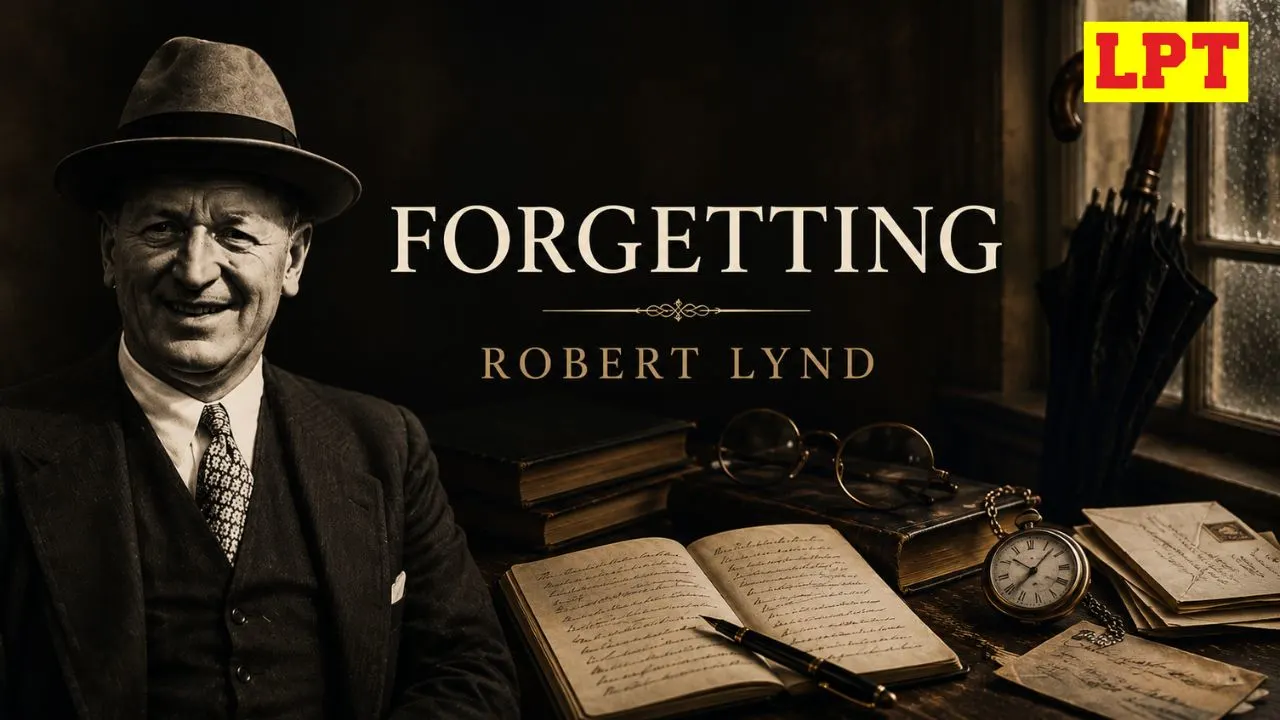
Forgetting by Robert Lynd is a humorous and highly relatable essay that explores the common habit of forgetfulness in everyday human life. In this essay, Robert Lynd explains how people often forget simple things such as umbrellas, letters, names, books, and appointments despite considering themselves careful and intelligent.
Through light humor and realistic examples, Lynd presents interesting observations about human memory, absent-mindedness, and psychology. The essay highlights themes such as human weakness, carelessness, memory, and humor in ordinary situations.
Below, we have covered the summary and central idea of Forgetting by Robert Lynd, important characters, themes, literary devices, vocabulary words, moral message, important questions with answers, and critical analysis.
Table Of Contents
- CLAT PG: All About CLAT Postgraduate Exam for LLM
Summary of Forgetting by Robert Lynd
In Forgetting, Robert Lynd humorously discusses the common human habit of forgetting things in everyday life. The essay focuses on absent-mindedness and the strange way human memory works. Lynd explains that even intelligent and responsible people often forget simple things such as umbrellas, letters, books, names, and appointments. Through humorous examples, he shows that forgetfulness is a universal human weakness.
At the beginning of the essay, Lynd talks about how people frequently leave behind umbrellas or fail to post letters despite carrying them for the whole day. He observes that forgetting usually happens not because people are careless by nature, but because the human mind gets distracted by many thoughts at the same time. He humorously points out that some people can remember difficult facts and details but still forget ordinary responsibilities.
Lynd also explains that memory behaves in an unpredictable manner. Sometimes people remember completely unnecessary information while forgetting important tasks. He compares different types of forgetfulness and shows how human beings often become victims of their own absent-mindedness. The essay contains several amusing situations that readers can easily relate to from their own lives.
Throughout the essay, Lynd uses humor, irony, and psychological observation to make ordinary incidents entertaining and meaningful. Instead of criticizing forgetful people harshly, he presents forgetfulness as a natural part of human behavior. The essay finally suggests that memory is imperfect, and human beings should recognize their weaknesses with humor and understanding rather than embarrassment.
Explore The Complete Summaries of Novels, Stories & Essay Notes
Short Summary of Forgetting Essay
In Forgetting, Robert Lynd humorously explains how forgetfulness is a common part of human life. People often forget umbrellas, letters, books, names, and important tasks despite considering themselves careful and responsible. Through funny and realistic examples, Lynd shows how human memory works in strange ways. Sometimes people remember useless details but forget essential responsibilities.
The essay highlights absent-mindedness, human weakness, and the humorous side of daily life. Using light satire and psychological observation, Lynd suggests that forgetfulness is natural and universal, and people should treat it with understanding and humor rather than frustration.
Download Forgetting by Robert Lynd: Full Essay PDF
Download PDFForgetting by Robert Lynd: Main Characters
The Narrator
The narrator is observant, humorous, reflective, and psychologically insightful. He carefully examines the habit of forgetfulness in everyday life and presents ordinary incidents in an entertaining way. His personality reflects curiosity about human behavior and memory. The narrator symbolizes common human nature because he admits that everyone suffers from absent-mindedness at some point.
Forgetful People
The forgetful people in the essay represent ordinary human beings who struggle with memory in daily life. They forget umbrellas, letters, books, names, and appointments despite trying to remain responsible. These characters symbolize human imperfection and absent-mindedness. Through them, Lynd humorously shows that forgetfulness is not limited to careless people alone but affects almost everyone. They help create relatable and realistic situations throughout the essay.
The Umbrella Owner
The umbrella owner is one of the most memorable symbolic figures in the essay. He represents people who repeatedly forget ordinary belongings despite knowing their importance. The umbrella becomes a symbol of everyday responsibility and human carelessness. Through this character, Lynd humorously highlights how people often fail at simple tasks while managing larger responsibilities successfully. The umbrella owner also reflects the unpredictable nature of memory.
The Letter Writer
The letter writer symbolizes people who intend to complete important tasks but fail because of distraction and absent-mindedness. Even after carrying the letter throughout the day, the person forgets to post it. This character represents the gap between intention and action in human behavior. Through such examples, Lynd explains that forgetfulness often results from mental distraction rather than laziness or irresponsibility.
Read Short Story Summaries
Read concise and student-friendly summaries of famous short stories along with themes, moral lessons, literary devices, and important questions:
| The Tell Tale Heart by Edgar Allan Poe | A Cup of Tea by Katherine Mansfield |
| The Night The Ghost In by James Thurber | Dr. Heideggers Experiment by Nathaniel Hawthorn |
Themes of Forgetting by Robert Lynd
- Human Forgetfulness: The main theme of the essay is human forgetfulness. Lynd shows that forgetting is a natural weakness shared by almost everyone.
- Humor in Everyday Life: The essay finds humor in ordinary situations and daily mistakes. Lynd turns simple incidents into entertaining observations about life.
- Human Psychology: Lynd explores how memory works unpredictably and how the human mind becomes distracted easily.
- Absent-Mindedness: The essay highlights absent-mindedness as a common human condition where people lose focus on simple responsibilities.
- Imperfection of Human Nature: The essay suggests that no human being is perfect. Forgetfulness becomes a symbol of ordinary human weakness.
- Irony of Memory: People sometimes remember useless details while forgetting important tasks. This irony becomes one of the most humorous aspects of the essay.
Read Novel Summaries
Expand your reading with these popular novel summaries helpful for students, competitive exam aspirants, and curious readers:
| Wings of Fire by APJ Abdul Kalam | Leaders Eat Last by Simon Sinek |
| Story of My Experiments With Truth by Gandhi | My Days: A Memoir by RK Narayan |
Forgetting Essay by Robert Lynd: Central Idea
The central idea of Forgetting is that forgetfulness is a universal and natural part of human life. Robert Lynd humorously explains that even intelligent and responsible people often forget ordinary things because the human mind becomes distracted easily. Through examples like forgotten umbrellas, letters, books, and names, Lynd shows how memory behaves unpredictably.
The essay also highlights the humorous side of human weakness. Instead of criticizing forgetful people, Lynd presents absent-mindedness with sympathy and understanding. He suggests that forgetfulness reflects the imperfect nature of human beings and should be viewed with humor rather than frustration. Through light satire and psychological observation, the essay presents an entertaining yet meaningful reflection on everyday human behavior.
Literary Devices Used in Forgetting
| Literary Device | Example / Reference | Effect in the Essay |
| Humor | Funny incidents of forgetting umbrellas and letters | Makes the essay entertaining and relatable |
| Irony | Remembering useless things but forgetting important tasks | Highlights the strange nature of human memory |
| Satire | Light criticism of absent-minded people | Humorously exposes human weaknesses |
| Anecdotes | Everyday examples from daily life | Makes the essay realistic and engaging |
| Reflection | Narrator’s thoughts on memory and behavior | Adds psychological depth to the essay |
| Conversational Style | Informal and friendly narration | Makes readers feel personally connected |
| Contrast | Important vs unimportant memories | Shows unpredictability of human memory |
| Repetition | Repeated examples of forgetfulness | Emphasizes how commForgetting is |
| Psychological Observation | Analysis of absent-mindedness | Explores human behavior realistically |
| Hyperbole | Exaggerated descriptions of forgetting | Increases humor and entertainment value |
Read Essay Summaries
Explore student-summaries of famous essays with detailed themes, moral lessons, literary devices, analysis, and important exam-focused questions.
| El Dorado by RL Stevenson | The Convalescent by Charles Lamb |
| The Golden Age by AG Gardiner | Tight Corners By EV Lucas |
Top Vocabulary Words Used in Forgetting Essay
| Word | Meaning |
| Absent-mindedness | Forgetfulness due to lack of attention |
| Forgetfulness | Inability to remember things |
| Distraction | Something that diverts attention |
| Responsibility | Duty or obligation |
| Irritation | Slight anger or annoyance |
| Carelessness | Lack of proper attention |
| Psychological | Related to the human mind |
| Habitual | Done regularly out of habit |
| Confusion | State of uncertainty or disorder |
| Recollection | The act of remembering something |
Moral Message of Forgetting
The essay teaches that forgetfulness is a natural human weakness shared by everyone. Robert Lynd reminds readers to view human mistakes with humor and understanding instead of frustration. The essay also highlights the imperfect nature of memory and encourages people to remain patient with themselves and others.
Read Novel Summaries
Expand your reading with these popular novel summaries helpful for students, competitive exam aspirants, and curious readers:
| Wings of Fire by APJ Abdul Kalam | Leaders Eat Last by Simon Sinek |
| Story of My Experiments With Truth by Gandhi | My Days: A Memoir by RK Narayan |
About the Author Robert Lynd
Robert Lynd was a famous Irish essayist, journalist, and literary critic born in 1879 in Belfast, Ireland. He became highly popular for his humorous and reflective essays based on everyday human experiences. Lynd had a special ability to observe ordinary situations and present them with wit, simplicity, and psychological insight. His essays often focus on human habits, emotions, memory, behavior, and social life in a light-hearted yet thoughtful manner.
Lynd worked as a journalist and contributed to many newspapers and magazines during his literary career. His writing style is conversational, humorous, and easy to understand, which makes his essays highly relatable for readers and students. Some of his well-known essays include Forgetting and The New Cat. Robert Lynd remains admired in English literature because of his ability to turn simple daily incidents into meaningful and entertaining reflections on human nature.
Forgetting by Robert Lynd: Questions and Answers
Why does Robert Lynd consider forgetting a common human habit?
Lynd considers forgetting a common human habit because almost everyone experiences it in daily life. People frequently forget umbrellas, letters, names, books, and important tasks despite making efforts to remember them. According to Lynd, forgetfulness is not limited to careless individuals but affects intelligent and responsible people as well. He explains that the human mind often becomes occupied with many thoughts at once, causing distraction and absent-mindedness.
How does the essay create humor through forgetfulness?
The essay creates humor by presenting ordinary incidents of forgetting in an exaggerated yet realistic manner. Lynd humorously describes people carrying letters all day but forgetting to post them, or losing umbrellas repeatedly despite trying to remain careful. The humor comes from the irony that people can remember difficult information while forgetting simple responsibilities.
What examples of forgetfulness are given in the essay?
Robert Lynd gives several everyday examples of forgetfulness in the essay. He talks about people forgetting umbrellas, failing to post letters, misplacing books, forgetting names, and missing appointments. One of the most famous examples is the person who carries a letter all day with the intention of posting it but still returns home without mailing it. Lynd also mentions how some people forget where they kept objects or fail to remember important responsibilities.
What does the umbrella symbolize in the essay?
The umbrella symbolizes ordinary responsibility and human carelessness in daily life. Lynd uses the example of forgotten umbrellas to show how even simple possessions can easily slip from human memory. The umbrella becomes a humorous symbol of absent-mindedness because people repeatedly lose or leave them behind despite knowing their importance. It also represents the unpredictability of memory and the weakness of human attention.
How does Robert Lynd explain the nature of human memory?
Lynd explains that human memory works in a strange and unpredictable manner. People often remember unnecessary details while forgetting important tasks and responsibilities. According to him, memory does not always function logically because the mind becomes distracted by many thoughts at the same time. He humorously points out that some individuals can remember historical facts or complicated information but still forget simple daily duties. Lynd’s observations suggest that memory is imperfect and selective.
Why is the essay considered psychological in nature?
The essay is considered psychological because it carefully examines human memory, distraction, habits, and behavior. Lynd studies how people think and why they forget ordinary things despite intending to remember them. He explores the relationship between attention, memory, and absent-mindedness in a humorous but insightful way. The essay goes beyond simple storytelling and presents deeper observations about the working of the human mind.
What writing style does Robert Lynd use in the essay?
Robert Lynd uses a humorous, conversational, reflective, and light-hearted writing style in Forgetting. His language is simple and easy to understand, making the essay highly relatable for readers. Lynd combines ordinary daily incidents with psychological observation and gentle satire. He uses humor to discuss serious aspects of human nature without making the essay heavy or critical. His friendly tone allows readers to recognize their own habits and weaknesses comfortably. This combination of humor, realism, and thoughtful reflection makes his writing engaging and memorable.
Critical Analysis of Forgetting Essay by Robert Lynd
Robert Lynd presents Forgetting as a humorous yet insightful essay about the imperfect nature of human memory. Through simple everyday incidents, Lynd explores absent-mindedness, distraction, and the common habit of forgetting ordinary responsibilities. The essay appears light and entertaining on the surface, but it also contains deep psychological observations about human behavior and mental limitations.
One of the strongest aspects of the essay is Lynd’s ability to transform ordinary situations into meaningful reflections on human nature. His conversational tone, realistic examples, and gentle satire make the essay highly relatable. The humor never becomes harsh or insulting; instead, it creates sympathy for human weakness. Lynd also highlights the irony of memory, where people often remember unimportant details while forgetting essential tasks. Overall, the essay successfully combines humor, realism, and psychological insight, making it both entertaining and intellectually engaging.
Read More Such Summaries
Explore Other Exam Preparation Resources
Prepare smarter with our dedicated coaching programs, preparation guides, mock tests, and study resources for top competitive exams in India.

Nidhi Priya
Nidhi Priya has over 6 years of experience in EdTech content and SEO. She specializes in content strategy, organic growth, and mentoring editorial teams, with previous experience at iQuanta, CollegeDekho, and Careers360.